
How to Stop Late-Night Online Shopping
Late-night online shopping can feel soothing when you are tired, stressed, or done with the day. Here is why nighttime spending gets so persuasive and how to stop it before tomorrow-morning regret kicks in.

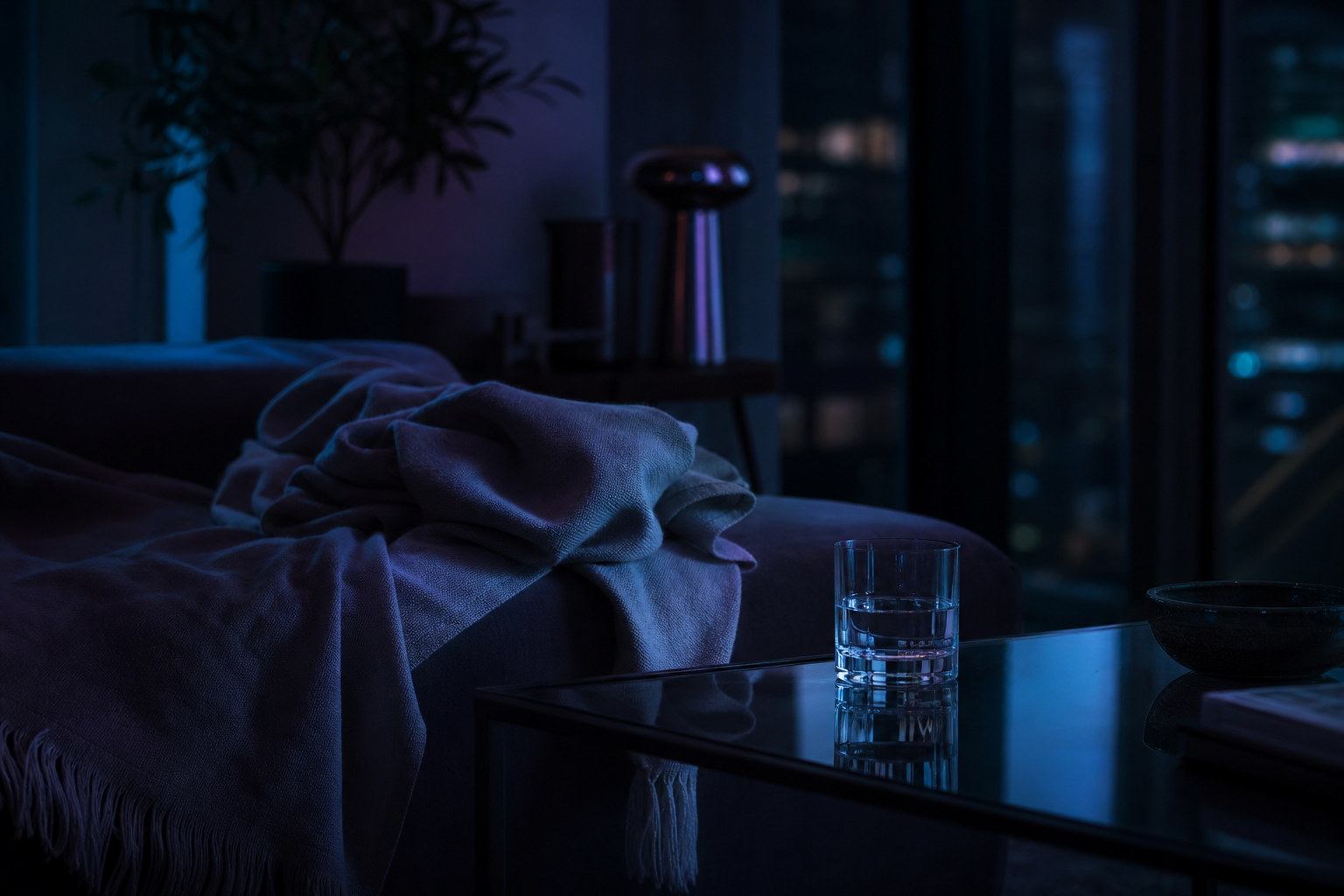
Late-night online shopping has a very specific kind of logic.
At 11:47 PM, the item can feel smart.
Useful.
Deserved.
By 8:10 the next morning, it can feel random.
That shift is not because you turned into a different person overnight.
It is because nighttime changes the conditions of the decision.
You are more tired. Your guard is lower. Your day may have left a residue of stress, boredom, loneliness, or "I need something for me" energy. A small purchase starts to feel less like spending and more like relief.
That is why late-night online shopping can be hard to stop.
It often does not begin with a strong need for the item. It begins with depletion.
You want the day to feel softer before it ends. You want a little reward. You want to leave your own head for a while. Shopping gives you a clean, glowing, low-effort way to do that.
The problem is that nighttime purchases are often approved by a version of you who is too tired to judge them clearly.
Once you see that loop, it gets easier to interrupt.
Why shopping feels more tempting at night
A lot of people assume their nighttime shopping habit means they are impulsive in some permanent way.
Usually, the pattern is more situational than that.
Night changes your decision-making environment.
You have fewer mental resources left.
The practical part of the day is over.
You are no longer moving with the same structure you had earlier. There are fewer external brakes. No meeting starting in five minutes. No commute. No coworker nearby. No obvious next task.
There is just you, a screen, and a little more emotional freedom than is always good for your wallet.
You are more depleted than you realize
A tired brain does not evaluate spending the same way a rested brain does.
When you are worn down, it is harder to hold future consequences in view. The cost feels less vivid. The need for relief feels more vivid.
That does not only apply to big purchases.
It applies to the "small enough" purchases too. The late-night skincare order. The home item you did not plan for. The discounted upgrade. The thing you tell yourself is minor because you do not want to have a full argument with yourself before bed.
The screen becomes a soft place to land
Nighttime browsing can start as decompression.
You get in bed. You sit on the couch. You tell yourself you are only going to look for a minute. Maybe you were answering texts first. Maybe you were scrolling TikTok or Instagram. Maybe an ad found you. Maybe you opened a shopping app without really deciding to.
And then the shopping environment starts doing its job.
There is novelty.
There is color.
There is possibility.
There is a low-pressure fantasy that one small thing might make tomorrow better.
That is part of why online shopping feels so hard to resist. It is not only about products. It is also about state change.
The future feels cheaper at night
Late at night, the purchase often lives in a strangely unreal space.
You are not holding the future package yet.
You are not looking at your bank balance in daylight.
You are not thinking about the other things that money could do for you this week.
You are mostly feeling the immediate emotional effect of saying yes.
That makes the purchase feel lighter than it is.
Then morning arrives, and the tradeoff becomes more concrete.
What late-night browsing is usually doing for you
If you want to stop the habit, it helps to stop asking only, "How do I get better at self-control?"
A better question is: what job is this browsing doing for me at night?
Because it usually is doing a job.
It gives you a reward at the end of the day
Sometimes the urge is not really about the item.
It is about wanting the day to end with something pleasant.
Maybe work felt draining.
Maybe parenting, logistics, study, chores, or emotional effort emptied you out.
Shopping can start to feel like a private little compensation system.
I got through the day. I should get something.
That is close to the pattern in revenge spending, but nighttime shopping is often smaller and quieter. Less dramatic. More habitual.
It helps you avoid the drop in stimulation
A lot of people do not like the moment when the day gets quiet.
That quiet can bring up stress, emptiness, loneliness, or the low-level panic of having to just be still.
Shopping gives your brain something to chase.
Tabs, saved items, reviews, comparisons, carts, wishlists, recommendations. Suddenly there is movement again.
If you notice the urge getting stronger when the house gets quiet, that matters. It means the shopping may be helping you avoid an emotional comedown, not solve a real buying problem.
It creates a tiny fantasy of tomorrow
Late-night shopping often carries a promise.
Tomorrow will feel fresher.
More organized.
More attractive.
More comfortable.
More together.
That is why these purchases can overlap with buying things for your fantasy self. At night, the future version of you can look especially convincing.
You are tired enough to want rescue, and the object offers a small version of it.
Signs the nighttime loop is running your spending
Not every nighttime purchase is a problem.
Sometimes night is simply when you finally have time to buy the practical thing you actually need.
The pattern is different when shopping has become your default way to regulate the end of the day.
You shop most after 9 or 10 PM
If the urge reliably spikes late, the timing itself is telling you something.
It suggests the behavior depends on fatigue, solitude, or lower structure.
You open shopping apps when you are not looking for one specific thing
You are not entering with a list.
You are entering to see what might grab you.
That is usually a mood-management move, not a practical errand.
The purchase feels obvious at night and flimsy in the morning
This is one of the clearest signs.
If the same item feels compelling before bed and unnecessary the next day, the nighttime version of the decision was probably being powered by a feeling state.
You tell yourself you deserve it because the day was hard
That thought is not irrational. It just deserves inspection.
A hard day does create a real need for comfort.
The question is whether buying something is the kind of comfort you actually want to keep paying for.
The browsing matters more than the item
You scroll and compare even when nothing is especially good.
You keep going because the process itself is soothing, absorbing, or numbing.
That tells you the real reward may be the state change, not the object.
How to stop late-night online shopping without shame
You do not need a dramatic no-buy identity to get better at this.
You need a gentler system that works specifically for nighttime decisions.
1. Name the hour as a risk factor
This helps more than it sounds like it should.
Instead of treating every urge as equally trustworthy, treat late-night wanting as a category.
You can literally tell yourself:
"I am allowed to want this. I am just not going to decide on it at midnight."
That small sentence creates distance without pretending the urge is fake.
2. Make buying wait until daylight
A very simple rule can do a lot here:
If I find it after a certain hour, I can save it, but I do not buy it until tomorrow.
Not next week.
Not never.
Just not tonight.
That matters because nighttime urgency often fades fast once sleep interrupts it.
This is where creating friction before you buy becomes practical, not theoretical.
Use a wishlist. Put the item in notes. Email the link to yourself. Leave the tab if you must. Just do not make tired-you the final approver.
3. Shrink your access to shopping at night
If the loop is strong, environment beats intention.
Try things like:
- logging out of shopping apps after dinner
- removing saved card details
- moving tempting apps off your home screen
- deleting one especially risky app during the week
- turning off sale and cart notifications
- using app limits if one platform is the main problem
This is not punishment.
It is design.
You are building for the version of you who has less energy at night.
4. Replace the landing spot
If shopping has become your default end-of-day ritual, you need another place for your attention to land.
Not a perfect ritual. Just a cheaper one.
You might:
- make tea and sit somewhere without your phone for ten minutes
- keep a paper list of things you think you want, then revisit it tomorrow
- read something low-stakes instead of opening retail apps
- text one person if the urge is really loneliness in disguise
- do a short reset routine before bed so the day has an ending that is not checkout
The replacement does not need to be noble.
It just needs to interrupt the path.
5. Ask what you are trying to feel
This is the most useful question in the whole process.
Before you buy, ask:
What am I hoping this purchase gives me right now?
Relief?
Reward?
Comfort?
Momentum?
A new version of tomorrow?
Sometimes the answer will make the purchase look less persuasive immediately.
Sometimes it will not. That is okay. The point is to stop calling an emotional need a shopping decision.
Use work-hours framing before the order goes through
Late-night shopping is one of the clearest cases where the price can stop feeling real.
The object is vivid.
The cost is abstract.
That is why work-hours framing helps so much.
Instead of asking only, "Can I technically afford this?" ask:
- how many hours of my life does this cost?
- would I still want it if I saw that time clearly right now?
- am I buying something useful, or am I trying to soothe the end of the day?
- if I sleep on this, does it still feel worth that time tomorrow?
Those questions bring the purchase back into reality.
That is exactly where paus fits. It gives you a calmer interruption before checkout, helps you see the cost in work hours, and creates a little space between a tired feeling and a real financial decision.
The goal is not perfection at night
You do not need to become someone who never shops after dark.
You just need to stop treating late-night desire as the cleanest version of what you want.
Night makes a lot of things feel more necessary than they are.
That does not mean your feelings are fake.
It means they deserve one more layer of protection.
If you keep spending more at night than you mean to, the fix is not shame.
It is a pause.
A little more friction.
A little more honesty about what the hour is doing to the decision.
If you want help with that, try paus. It helps you slow down, translate a purchase into work hours, and make the call with a clearer head.
FAQ
Why do I buy things late at night?
Late-night shopping often happens because you are tired, less defended, and more likely to want quick relief or reward. The purchase can feel emotionally useful in the moment, even if it looks unnecessary the next morning.
Is late-night online shopping a sign of emotional spending?
Often, yes. Not always, but often. If the urge is strongest when you feel depleted, lonely, stressed, or done with the day, the purchase may be doing emotional work beyond the item itself.
How do I stop impulse buying at night?
A good first step is delaying all nonessential purchases until the next day. You can also add friction by logging out of apps, removing saved cards, turning off notifications, and saving items to a neutral list instead of checking out immediately.
Why do things feel worth buying at night and not in the morning?
Because nighttime changes the decision environment. Fatigue makes relief feel more urgent and future costs feel less vivid. Morning usually restores perspective.