
Why Do I Keep Buying Things for My Fantasy Self?
If you keep buying clothes, books, tools, or supplies for the person you want to become, the purchase may be selling you a feeling before it gives you a real change.

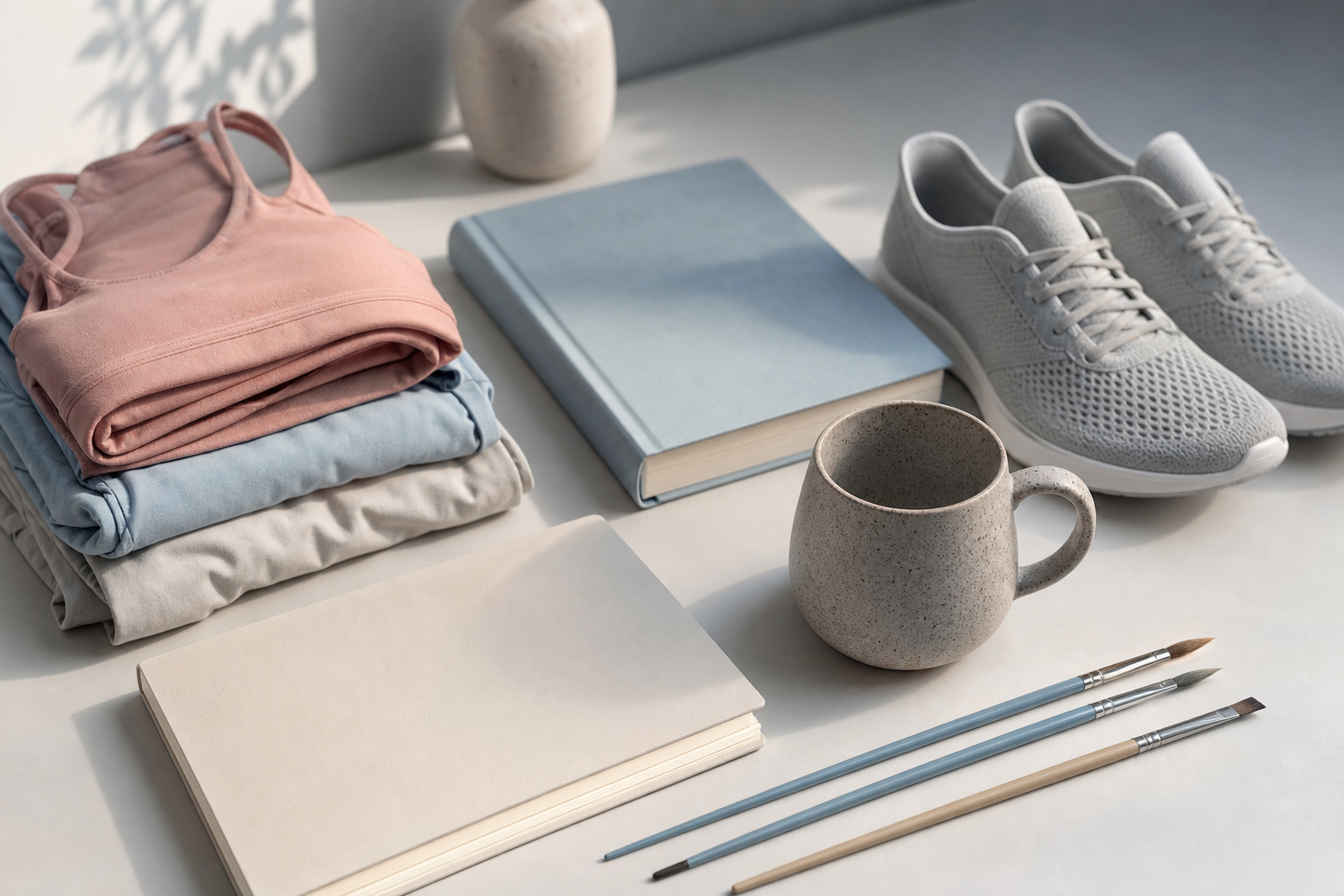
You buy the notebook. Or the workout set. Or the expensive kitchen tool. Or the course, the vitamins, the planner, the new shoes, the paint set, the storage bins.
And for a moment, it all makes sense.
This is the version of you who finally gets organized. Who cooks. Who wakes up early. Who reads more. Who becomes the kind of person who has a system.
Then a week passes. Maybe a month. The item sits there. And what felt hopeful at checkout starts to feel weirdly embarrassing.
If you keep buying things for your fantasy self, you are not the only one. This is a very common spending pattern, especially when you are tired of feeling behind and hungry for a reset.
The hard part is that these purchases do not feel random. They often feel meaningful. Responsible, even. Like you are investing in a better life.
Sometimes you are. But sometimes you are buying the emotional shortcut of becoming, not the slower reality of change.
What fantasy-self spending actually is
Fantasy-self spending happens when you buy something for the person you hope to be, not the person your actual life can currently support.
That does not mean the hope is fake. Usually the hope is real. You may want to become more organized, healthier, calmer, more creative, better dressed, more productive, or more prepared.
The problem is not the goal. The problem is when the purchase starts doing too much psychological work.
Instead of being a tool, it becomes a symbol. Instead of helping with one concrete next step, it starts carrying a whole identity.
That is why one item can feel much bigger than it looks. A planner is not just a planner. It is the fantasy of getting your life together. A pan is not just a pan. It is the fantasy of becoming someone who cooks beautiful, regular meals. A stack of books is not just reading material. It is the fantasy of becoming wiser, steadier, more disciplined.
That emotional layering is exactly why these purchases can feel so convincing. This is also narrower than always wanting new things, where the pull is novelty itself. Here the pull is identity: the purchase is for a version of you that has not arrived yet.
Why these purchases feel so good in the moment

Buying for your fantasy self can create a rush of relief because the purchase seems to close the gap between where you are and where you want to be.
For a few minutes, you do not have to sit with the messy middle. You do not have to practice. You do not have to be inconsistent. You do not have to figure out whether your schedule, energy, and habits actually support this new version of you.
You just have to buy the object.
That can feel amazing. Because it gives you a quick hit of progress without requiring the harder part yet.
A few things are usually happening at once.
1. The purchase lets you rehearse a new identity
You get to imagine yourself in a different life. Not someday in an abstract way. Right now.
The object makes the future feel touchable. That is powerful. Especially if your current life feels scattered, dull, stressful, or disappointing.
2. The purchase feels easier than the behavior change
It is easier to buy running clothes than to build a running habit. It is easier to buy organizing products than to sort the mess you already have. It is easier to buy a language app than to practice a language when you are tired.
The item can feel like motion. And sometimes that is enough to trick your brain into feeling soothed.
3. The purchase protects you from a painful story
If you feel behind, chaotic, undisciplined, or stuck, a fantasy-self purchase can temporarily soften that feeling.
It says, "No, no. I am working on it. I am becoming someone else."
That does not make you shallow. It makes you human. A lot of spending is not just about getting things. It is about managing self-perception.
4. Hope is emotionally rewarding on its own
This part matters. Hope has a mood-lifting effect. Sometimes the purchase works because it gives you access to a better feeling right now, whether or not the item changes your behavior later.
That is why fantasy-self shopping can overlap with emotional spending. You are not only buying an object. You are buying relief from the current version of the story.
Where this pattern usually shows up
This can happen almost anywhere, but a few categories are especially loaded.
Self-improvement purchases
Books, courses, journals, habit trackers, supplements, productivity tools.
These can carry a lot of emotional promise. They let you imagine a more focused and capable version of yourself. That is part of why why do I keep buying self-help books and still feel stuck hits such a nerve.
Hobby and creativity purchases
Art supplies, instruments, sewing tools, camera gear, craft kits.
Sometimes you are buying a hobby. Sometimes you are buying the self-image of being creative, expressive, or interesting. That is close to why do I keep buying hobby supplies and never using them.
Organization and productivity purchases
Storage bins, planners, desk tools, apps, digital systems, notebooks, label makers.
These purchases often feel like control. They can be deeply appealing when life feels noisy or behind. That is why they overlap with why do I keep buying organizing products and still feel messy and why do I keep buying productivity tools and still feel behind.
Style, wellness, and lifestyle purchases
Clothes for the "put together" version of you. Kitchen gear for the home-cooked-life version of you. Travel gear for the adventurous version of you. Beauty or wellness items for the calm, glowing, disciplined version of you.
Sometimes the item is useful. Sometimes it is carrying a whole new life on its back.
Why the items so often go unused
This is usually the painful part. The purchase felt full of energy. The actual object lands in your real life and quietly meets all the limits that were there before.
Your real schedule is still crowded. Your real energy is still uneven. Your real home is still messy. Your real attention is still pulled in ten directions.
The object enters a life that was never as spacious as the checkout fantasy.
That does not mean you lied to yourself. It means the purchase was built on an idealized version of your future capacity.
A lot of these items go unused because they were bought for a self with:
- more time
- more energy
- more consistency
- more emotional bandwidth
- fewer competing problems
Real life usually shows up before the ideal self does.
There can also be a second layer of avoidance. Once the item becomes emotionally loaded, using it can start to feel risky.
If you open the expensive sketchbook and do not magically become creative, that hurts. If you read the book and still feel stuck, that hurts too. Sometimes keeping the item untouched protects the fantasy a little longer.
There is a quieter clue that works before the purchase, too. The emotional charge often drops the moment the item arrives. The fantasy is vivid at checkout. Then the object lands in your real life and just becomes another thing. If most of a purchase's energy lived in the imagining, that gap between the promised feeling and the actual object is a sign it was for your fantasy self.
How to interrupt the pattern without killing your ambition
The goal here is not to become cynical. You do not need to stop wanting things for your future. You just want to get better at telling the difference between support and symbolism.
1. Ask who the item is really for
Before you buy, try this question: Is this for my actual next week, or for an imagined version of me?
Not every future-self purchase is bad. But if the item only makes sense in a life you are not currently living, that matters.
A second check: have you already bought a version of this before? Fantasy-self purchases tend to repeat. The planner you already own, the kit under the bed, the half-finished course. If this is round two or three, the pattern is doing the buying, not the item.
2. Name the exact behavior the purchase supports
Be specific. Not "I want to get healthier." More like, "I will use this twice this week after work."
If you cannot name the real next use, the purchase may be mostly emotional.
3. Look for symbolic progress
This one is big. Sometimes buying the item feels like you already started. But buying is not starting. It is only buying.
That sounds obvious, but it helps. Especially when the cart is full of identity.
4. Try the smallest version first
Before you buy the full setup, ask whether there is a lighter test. Could you borrow it, use what you already have, try the free version, or do one session without the gear?
This is a good way to separate real interest from fantasy shopping.
5. Pause long enough to feel the story attached to the item
A lot of identity spending moves fast because the emotional story is doing the selling.
"This will fix me." "This is the fresh start." "This time I will become the kind of person who follows through."
If you pause long enough to hear that story clearly, the spell often weakens.
That is where paus can help. It gives you a place to stop before checkout, see what the purchase costs in work hours, and ask whether you are buying a tool or buying temporary hope.
How to tell real support from another fantasy-self purchase
A useful purchase usually fits your life as it already is. It does not require a personality transplant.
That means it often has a few signs:
- you know when you will use it
- it works with your current schedule
- it solves a real friction point
- you would still want it even if nobody ever saw it
- it supports a habit you have already started, even imperfectly
A fantasy-self purchase often sounds different. It tends to lean on words like "finally," "new me," "this time," or "once I have this."
That does not mean the purchase is always wrong. It just means it deserves more suspicion.
If an item is carrying your hope, your shame, and your identity all at once, it is probably too heavy for one checkout button.
When work-hours framing changes the picture
Fantasy-self purchases can seem responsible because they wear the costume of self-improvement. That makes them easier to justify than obviously impulsive buys.
But the money still comes from your real life. From actual work. From actual time.
So it helps to ask: How many hours of my life does this version of me cost? And has that version of me earned this tool yet, or am I trying to buy the feeling first?
That question is not meant to humiliate you. Sometimes the answer will be, yes, this is worth it. Good.
But sometimes work-hours framing cuts through the fantasy fast. It shows you that a hopeful identity purchase is also a trade. Time for possibility. Hours for a story.
That clarity matters. Because it gives you one more chance to choose with your real self in the room.
A gentler way to think about it
If you keep buying things for your fantasy self, it usually means you want change badly enough to reach for it. That part is not pathetic. It is tender.
The problem is that shopping can imitate transformation. It can make becoming feel close without making it real.
So the next time a purchase seems loaded with a new identity, slow it down. Ask what the item actually supports. Ask whether your current life has room for it. Ask whether you are buying help, or buying relief from disappointment.
You do not need to give up on your future self. You just do not need to keep sending money to a version of you that never has to deal with Tuesday.
If this is one of your loops, try paus. It helps you pause before identity-driven spending, see the real cost in work hours, and make a calmer decision about whether the purchase belongs to your real life.
FAQ
What does it mean to buy for your fantasy self?
It means buying something for the version of you that you hope to become, rather than the version of you your current habits, time, and energy can realistically support right now.
Why do self-improvement purchases feel so good?
Because they can create a fast sense of hope and progress. The item makes change feel immediate, even before any real behavior has changed.
How do I stop buying things for my future self?
Pause before checkout, name the exact behavior the item supports, and ask whether it fits your actual next week. Smaller tests also help separate real interest from identity shopping.
What should I do with the things I already bought for my fantasy self?
Start with kindness, not cleanup pressure. The items were bought with real hope, and that is not stupid. Pick one item and give it a real chance in your actual routine this week, even imperfectly. If it still does not fit, sell, gift, or donate it, and let what comes back fund one real-life step. The goal is not to punish past purchases. It is to keep the next one from doing the fantasy's work alone.
Are all future-self purchases bad?
No. Some purchases do support growth. The key question is whether the item fits your real life and a real next step, or whether it is mostly carrying a fantasy about who you want to be.