
Why Do I Keep Buying Hobby Supplies and Never Using Them?
If you keep buying art supplies, craft kits, notebooks, or gear for hobbies you rarely start, the problem is usually not laziness. Buying supplies can feel like progress before the real work begins.

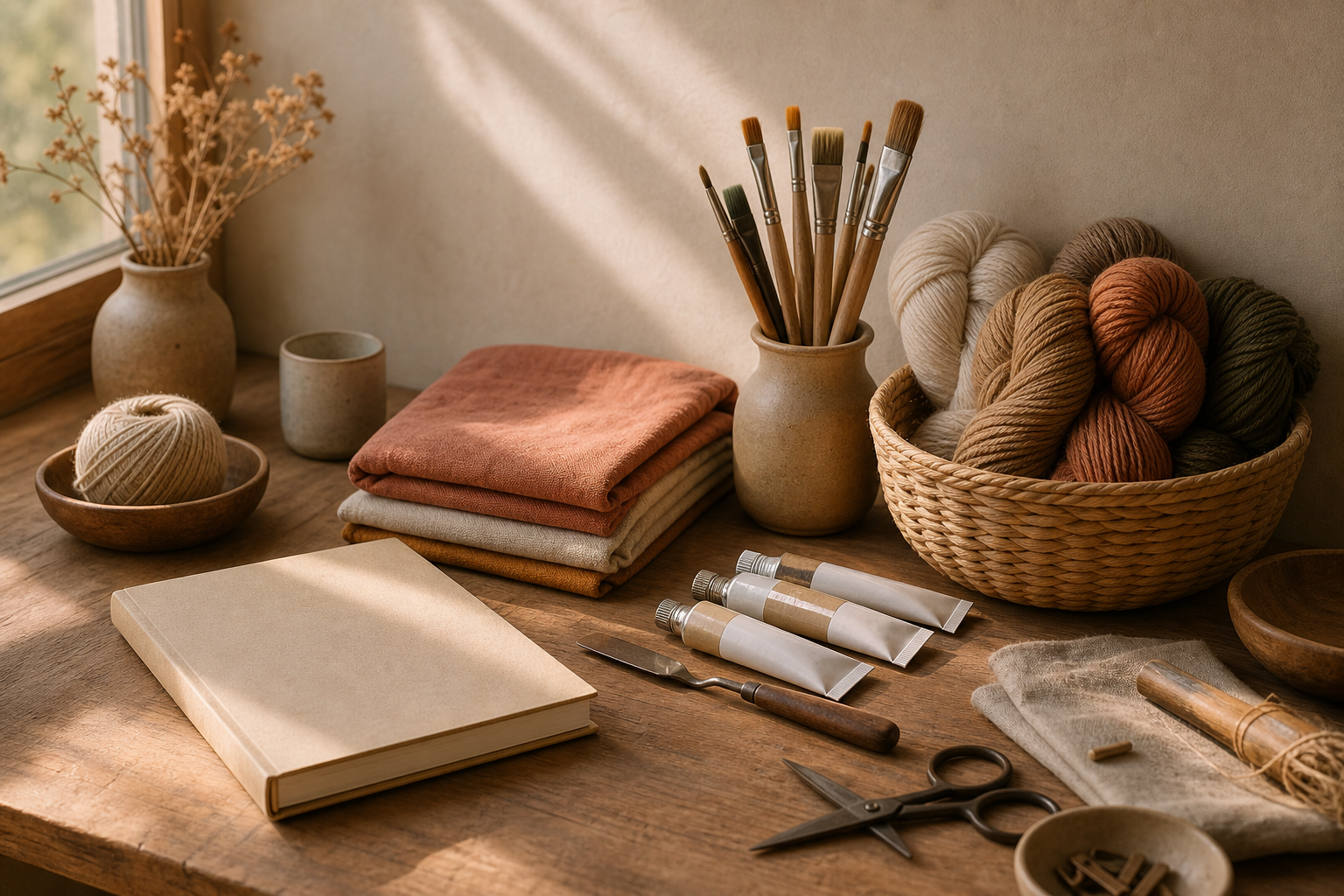
Sometimes the purchase feels like the beginning.
You buy the sketchbook. The yarn. The watercolor set. The camera accessory. The baking tools. The language notebook. The tiny upgrade that makes the hobby feel official.
For a moment, it is energizing. You can picture the version of you who finally becomes consistent, creative, disciplined, or interesting.
Then the package arrives. And instead of using it right away, you set it down. Maybe for later. Maybe for the weekend. Maybe for when you have more time, more focus, more energy, or a cleaner apartment.
Later keeps moving. The supplies stay. And now the money is gone, the hobby still has not started, and the unused item quietly turns into guilt.
If that guilt arrives as soon as the order is placed, buyer's remorse can help you separate a poor purchase from the emotional drop that sometimes follows spending.
If you keep buying hobby supplies and never using them, that does not automatically mean you are flaky or bad at following through. Usually, it means the purchase was doing an emotional job before the hobby ever had a chance to do a practical one.
Buying supplies can give you relief, hope, identity, and a temporary sense of progress. Actually doing the hobby asks for something else. Time. discomfort. repetition. beginner energy. The willingness to be ordinary at first.
That gap is where a lot of this spending happens.
Why buying supplies can feel like progress even when nothing has started
A supply purchase often feels more meaningful than it looks from the outside.
You are not only buying objects. You are buying the opening scene. The possibility. The version of the story where you get into pottery, start drawing again, bake your own bread, learn the guitar, journal every morning, or finally become the kind of person who has a real hobby.
That matters because the brain often responds to preparation as if it counts as movement. Browsing, comparing, researching, choosing, and ordering can create a satisfying sense that something is already underway.
In a way, it is underway. Just not in the form you wanted.
The project has begun emotionally, but not behaviorally. You got the spark without the follow-through.
This is one reason supply shopping can become its own loop. The purchase gives you a quick hit of forward motion without asking you to sit through the harder part of being new, imperfect, or inconsistent.
And online shopping makes that loop even easier. Products are organized into beautiful beginner bundles. Reviews say things like "This got me back into painting." Social feeds make every hobby look calming, meaningful, and photogenic. The cart fills up long before real practice begins.
Why hobby spending often attaches to your future self
A lot of unused supplies belong to a future version of you.
Not the tired version. Not the distracted version. Not the version who gets home from work and wants to scroll for a while.
The purchase belongs to the version who wakes up early, keeps promises to themselves, and turns interest into a real rhythm.
That is why this pattern overlaps with How to Stop Buying Things for Your Fantasy Self. The item is not only useful in theory. It also carries identity.
A new hobby can mean:
- I am becoming more creative
- I am becoming more disciplined
- I am becoming more interesting
- I am becoming healthier or calmer
- I am finally getting my life together
When a purchase carries that much hope, it becomes very easy to justify. The item can feel less like a simple expense and more like an investment in who you are about to become.
But identity purchases have a blind spot. They let you feel close to the new self without making daily life more compatible with the habit itself.
You can own expensive markers and still avoid drawing. You can buy baking equipment and still not want flour all over the kitchen after work. You can order a language workbook and still feel too mentally drained to study at night.
The problem is not always the hobby. Sometimes the problem is the story the purchase was trying to tell.
Why shopping for the hobby can feel easier than doing the hobby
Doing the hobby usually means meeting your real self.
Shopping for the hobby lets you stay with the ideal one.
That difference is huge.
The shopping part is clean. You are full of intention. You are competent enough to compare products. You are still protected from the awkward middle where you realize you are rusty, underpracticed, impatient, or not as naturally gifted as you hoped.
Using the supplies can bring up things shopping does not. For example:
- beginner embarrassment
- perfectionism
- frustration when progress is slow
- the mess of setting up and cleaning up
- the fact that leisure still requires effort
- the emotional drop after the fantasy version meets reality
A lot of people think they have a motivation problem when they actually have a tolerance problem. They want the hobby, but they do not yet tolerate the feeling of being bad at it.
So they keep circling the safer edge of the experience. Researching. Planning. Buying. Upgrading. Watching other people do it. Saving ideas for later.
That is not random. It is a form of avoidance that still feels productive.
If this pattern shows up in other areas too, you may recognize it from Emotional Purchases Usually Start Before Checkout. Here's How to Notice Them Early. By the time you click buy, the emotional payoff may already be happening.
Why small hobby purchases hide how much you are really spending
One more reason this loop sticks around is that the purchases often look harmless one by one.
A pack of pens. A storage case. A better brush. A replacement blade. A digital pattern. A notebook. A stand. A mat. A new set because the old one was not quite right.
None of those always feels dramatic enough to trigger resistance. Each purchase can seem small, practical, even responsible.
But category spending adds up fast.
This is especially true when the real purchase is not one item. It is permission to keep preparing. The little add-ons do not just expand the hobby. They extend the fantasy that you are almost ready.
Sometimes that is why the money feels so slippery. You are not noticing one large splurge. You are noticing a hundred tiny completions that never become actual use.
The supplies can also create visual confusion. Owning more hobby items can make it seem like you are close to a breakthrough, when in reality the collection is growing faster than the practice.
At that point, the clutter starts doing emotional damage too. Unused materials become reminders. Now the hobby is not just unfinished. It is sitting in the room watching you avoid it.
That is part of why this pattern can start to resemble the tension in Why Do I Keep Buying Organizing Products and Still Feel Messy?. The solution pile starts to create its own pressure.
How to tell real interest from preparation shopping
You do not need to stop being curious. And you do not need to prove that every hobby purchase is a mistake.
The goal is to separate actual desire from the relief of imagining yourself changed.
A few questions can help:
1. Do I want to do the hobby, or do I want to feel like the kind of person who does it?
Sometimes the honest answer is both. That is fine. But if identity is doing most of the work, the purchase may carry more hope than use.
2. Am I willing to do the first boring or awkward version of this?
Real interest survives contact with beginner reality. If you only want the polished version, you may be buying the image instead of the practice.
3. Have I used what I already own enough to know what is missing?
This question catches a lot. Many upgrades arrive before any real constraint appears. If you have not reached the limit of the basics, the new item may be more exciting than necessary.
4. Would I still want this if nobody saw it and I could not turn it into a new identity story?
That question can feel sharp, but it is useful. It separates private desire from self-narration.
5. Am I buying because I want to begin, or because I feel bad that I have not begun?
Guilt spending often disguises itself as recommitment. You feel behind, so you buy something that helps you feel serious again. But seriousness and action are not the same thing.
How to break the cycle without shaming yourself
This usually works better as a friction problem than a discipline problem. You do not need a dramatic ban on every hobby purchase. You need a better pause between the emotion and the cart.
Try this instead.
Use what you have before diagnosing what you need
Give yourself a small usage threshold. For example:
- fill 10 pages before buying another notebook
- complete 3 sessions before upgrading equipment
- make one imperfect project before purchasing the next tool
This keeps the hobby connected to lived experience instead of fantasy accumulation.
Make the first version smaller and uglier on purpose
A lot of supply buying is really an attempt to avoid the vulnerability of starting badly. So lower the bar aggressively.
Do the quick sketch. Bake the uneven loaf. Practice 10 minutes. Film the awkward video. Make the hobby real before you make it optimized.
Track the category, not just the item
Instead of asking, "Can I afford this brush set?" ask, "How much have I spent trying to start this hobby in the last 60 days?"
That wider question brings the pattern back into view. It also makes it easier to notice when the spending is replacing the practice.
Translate the price into work hours
This is where a calmer spending tool can help. When you turn a purchase into time, the emotional spell weakens a little. A new kit may feel harmless as a number. It can feel different when you see it as part of your afternoon, your evening, or a chunk of your week.
If you want help creating that pause, try paus. It lets you slow down before checkout and see what a purchase really costs in work hours, which is especially useful when "just one more supply" starts sounding harmless again.
Create a "start first" rule
Before buying anything new for a hobby, do one real action from the hobby itself. Not the shopping action. The hobby action.
Draw for 15 minutes. Read the first lesson. Mix the dough. Tune the instrument. Edit one photo. Do something that proves the desire exists outside the cart.
That one shift can tell you a lot. If the urge disappears once you actually begin, the purchase may have been about emotional activation more than real need.
What if the hobby still matters to you?
Then the answer is not to mock yourself for caring. A lot of people really do want a more creative or grounded life. The problem is not wanting that. The problem is trying to buy the emotional certainty of it in advance.
You may not need more supplies. You may need a gentler entry point. A smaller routine. Less perfectionism. A setup that fits your actual weekday energy instead of your imaginary ideal schedule.
That is a much kinder problem to solve. And it is usually the real one.
A calmer way to think about unused hobby supplies
Unused supplies do not always mean the interest was fake. Sometimes they mean the purchase carried too much hope and not enough realism. Sometimes they mean shopping gave you the most rewarding part up front. Sometimes they mean the life you were imagining did not match the life you were actually living that week.
That does not make you hopeless. It just means the buying moment needs a little more honesty.
Before you buy the next tool, kit, or upgrade, pause long enough to ask what the purchase is trying to do for you. Is it solving a real problem in the hobby? Or is it helping you feel closer to a version of yourself you miss?
That question alone can save money, clutter, and a lot of unnecessary self-blame.
And if you want support in that exact moment, try paus. It helps you step out of the rush, translate the price into work hours, and make a calmer decision before another hopeful purchase turns into shelf guilt.
FAQ
Why do I buy craft supplies and never use them?
Often because buying feels like progress before the real work begins. The purchase gives hope, identity, and momentum. Using the supplies asks for time, practice, and tolerance for being a beginner.
Is buying hobby supplies a kind of impulse spending?
It can be. Not always in a reckless way, but often in an emotionally loaded way. The urge may come from hope, boredom, guilt, perfectionism, or the desire to feel like a more put-together version of yourself.
How do I stop buying supplies for hobbies I never start?
Try using what you already own before buying more, track the category instead of single items, and create a rule that you must do one real hobby action before any new purchase.
Does unused hobby gear mean I do not actually care about the hobby?
Not necessarily. It may mean the hobby matters to you, but your purchase process is trying to solve feelings that practice itself cannot solve quickly.