
Why Do I Keep Buying Things When I Feel Overwhelmed?
When life feels like too much, buying can start to feel like relief, rescue, or simplification. Here is why overwhelm can turn into spending and how to slow the pattern down.

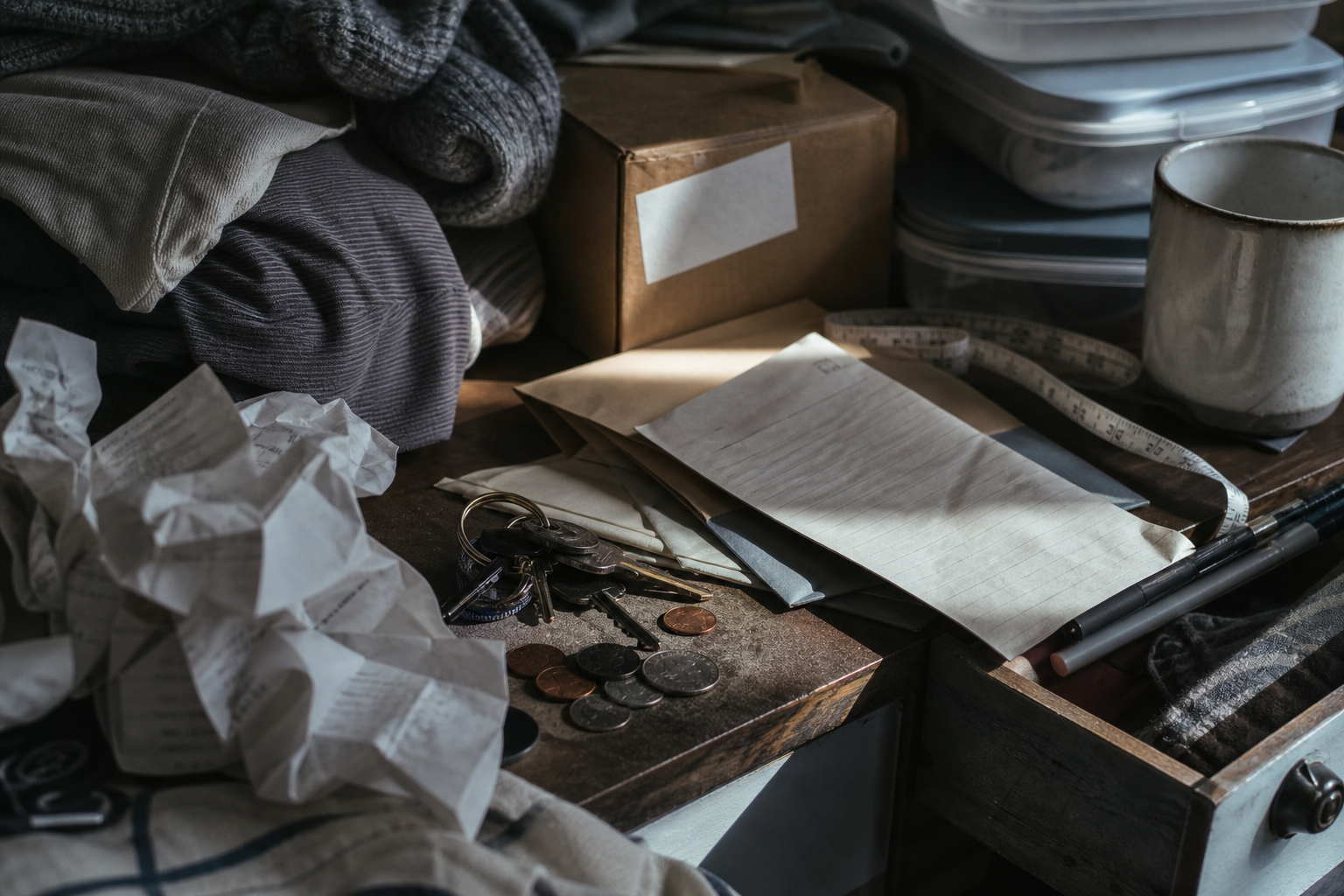
When you feel overwhelmed, a purchase can start to feel weirdly reasonable. Not exciting. Not even indulgent. Just... helpful.
You are behind on messages. Your space feels messy. You have too many tabs open in your brain. You are tired of deciding things. You want something to get easier.
Then suddenly buying feels like a shortcut. Order better storage. Replace the thing that annoys you. Get takeout again. Buy the planner. Upgrade the skin care. Try the app. Get the thing that might finally make life feel more manageable.
If you keep buying things when you feel overwhelmed, the purchase is often trying to do more than solve a practical problem. It is trying to reduce internal pressure. It is trying to make the day feel smaller. It is trying to create the feeling that something is handled.
That is why overwhelm spending can be hard to spot. It does not always look impulsive in the usual sense. It can look productive, efficient, or self-supportive.
Sometimes it really is support. But sometimes the item is carrying a job it cannot actually do.
Why overwhelm can turn into spending
Overwhelm changes the way decisions feel. When your mind is crowded, even simple things can start to feel heavy. You do not just want an object. You want less friction. Less noise. Fewer loose ends.
That is why buying can become appealing in moments like this. A purchase offers a clean, fast story:
- This will help
- This will fix one part of the mess
- This will make tomorrow easier
- This will give me a sense that I am doing something
That story matters. When you feel overwhelmed, your brain is often not looking for the best long-term decision. It is looking for relief it can reach quickly.
Sometimes shopping gives that relief before anything even arrives. The moment you click buy, one piece of uncertainty seems settled. You feel a little less stuck. A tiny sense of rescue appears.
This overlaps with Why Shopping Feels Like Relief When You're Stressed, but overwhelm has its own texture. Stress often feels urgent and emotional. Overwhelm feels crowded. It is the feeling that there are too many moving parts and you do not have enough mental space to hold them.
In that state, spending can feel like outsourcing your distress.
What the purchase is really trying to solve
When overwhelm spending happens, the object is usually not the full point. The deeper wish is often one of these:
A smaller mental load
You want one less thing to think about. If the purchase promises convenience, speed, comfort, or order, it can feel like mental relief in object form.
A feeling of progress
Overwhelm can make you feel frozen. Buying something can create movement. Even if nothing important has changed yet, it can feel like you addressed a problem.
Rescue from decision fatigue
When you are mentally tired, buying can feel easier than evaluating. You stop asking, "Do I really need this?" and start asking, "Would this make life easier right now?"
Permission to stop struggling
Sometimes the purchase says, "You have done enough. Let this one thing help." That is why spending can feel caring in the moment.
A fantasy of simplification
This part is easy to miss. You are not only buying the item. You are buying the imagined version of your life after the item. Cleaner. Easier. More organized. More under control.
That fantasy can be comforting. It can also be expensive.
Signs you want relief, not the item
Not every purchase during overwhelm is a mistake. Sometimes you genuinely do need help, replacement, or support.
The useful question is whether the purchase solves a real problem or mainly soothes the feeling of being overloaded.
You may be buying relief more than the item if:
- the urge appears when your to-do list feels emotionally louder than usual
- you feel drawn to things that promise ease, order, or a reset more than specific usefulness
- you feel calmer as soon as you decide to buy, before the item has done anything
- the purchase seems like it will fix your whole mood, not one clear problem
- you keep telling yourself that this one thing will help you "get back on track"
- you do not want to compare options because thinking harder feels unbearable
- the item sounds better in your imagination than in your real routine
A good check-in question is: what exactly becomes easier within the next three days if I buy this?
If the answer is vague, emotional, or bigger than the item itself, there is a good chance the purchase is carrying overwhelm for you.
Another useful question is: am I trying to meet a need, or am I trying to quiet a state?
That distinction changes a lot.
Common overwhelm-spending loops
Overwhelm spending does not always look dramatic. It often hides inside normal adult purchases.
The convenience rescue loop
You are too tired to cook, plan, return, clean, sort, or compare. So you spend to skip effort. Delivery, rush shipping, duplicate items, quick fixes, and upgraded versions all start to feel justified because they seem to remove friction.
The organization loop
When life feels scattered, storage bins, planners, labels, baskets, apps, and systems can look like emotional rescue. This can overlap with Why Do I Spend Money to Feel in Control?, but the driver here is not just control. It is mental crowding. You want your life to feel easier to hold.
The replacement loop
Something minor annoys you, and suddenly replacing it feels urgent. A better charger. Better containers. Better shoes. Better tools. Sometimes the item really is useful. But sometimes the intensity comes from how little bandwidth you have left for tiny frustrations.
The online drift loop
You open a shopping app because you want a break, not because you need something. Browsing gives your brain a narrow lane to follow. Compared with your actual life, the app feels simple. This can sit next to How to Interrupt an Impulse Purchase Before It Turns Into Regret, because the shift from browsing to buying can happen fast when your mind wants an exit.
The self-support loop
This one is tricky because it often sounds kind. You tell yourself you deserve support, softness, or ease. That may be true. But support can quietly turn into spending that keeps expanding because you are trying to soothe overwhelm with purchases instead of reducing the sources of strain.
Why this pattern can leave you feeling worse
Overwhelm spending often backfires because it gives quick relief without much real reduction in mental load.
Now you still have the original stressors. But you may also have:
- a lighter bank balance
- another package to deal with
- more decisions once the item arrives
- guilt about whether it was necessary
- disappointment that you do not actually feel that different
This is the painful part. You were not being careless. You were trying to cope. That is why the regret can feel confusing.
The purchase helped for a minute. It changed the feeling. But it did not always change the situation.
That can create a loop:
- Life feels like too much
- A purchase promises relief
- You feel calmer when you buy
- The bigger overwhelm stays
- You feel disappointed or guilty
- Another small purchase starts to look helpful again
Once you see the loop, it gets easier to interrupt it with less shame.
How to interrupt the urge without making life harder
You do not need a strict no-spend speech when you are already overloaded. Usually that just adds another layer of pressure.
What helps more is making the moment smaller and clearer.
Name the job the purchase is trying to do
Before buying, finish this sentence:
"I want this because I need life to feel more..."
The answer might be:
- easier
- quieter
- cleaner
- more handled
- less chaotic
- more forgiving
That answer is useful because it reveals the actual need. Then you can ask whether the item is the best way to meet it.
Reduce one pressure point before deciding
If you are overloaded, do one small thing first. Close three tabs. Drink water. Reply to one message. Throw away the obvious trash. Set a 10-minute timer and clear one surface.
The goal is not productivity. It is to lower the emotional volume before you decide. A purchase often feels less necessary when the pressure drops even a little.
Turn the vague rescue plan into a concrete test
Ask:
- What problem does this solve?
- Is that problem happening today?
- What is the non-buy version of support?
- Would I still want this after one night of sleep?
Overwhelm likes fuzzy promises. Specific questions make the purchase earn its place.
Use a pause that still feels kind
A harsh delay can feel punishing. A gentle pause works better. Put the item on a list. Save the tab. Write down why you want it. Come back tomorrow.
If you want a built-in way to do that, paus can help you slow the moment down, add a little friction, and see what the purchase costs in work hours before you decide.
Ask what kind of support you actually need
Sometimes the real need is not the item. It is rest. Food. Help. A smaller commitment. A reset in your environment. A short walk. Permission to do less tonight.
That answer may not feel as satisfying as clicking buy. But it is often more honest.
When a purchase actually is support
It is worth saying clearly: not every overwhelmed purchase is avoidance. Sometimes buying the thing is the right move.
A purchase may be real support if:
- it solves a specific recurring problem
- you would still want it on a calmer day
- it reduces future friction in a clear, measurable way
- you have considered at least one alternative
- the relief comes from usefulness, not fantasy
That last point matters. A supportive purchase usually makes one part of life easier. It does not promise to remake your whole emotional state.
If you can describe the benefit plainly, you are on steadier ground. If the benefit sounds like "maybe I will finally feel like everything is under control," you are probably asking too much from the item.
A calmer way to look at this pattern
If you buy things when you feel overwhelmed, it does not mean you are bad with money. It usually means you are trying to create relief inside a system that already feels too full.
That is human. And it is workable.
The goal is not to become perfect. It is to catch the moment when buying starts to look like emotional compression. The moment when the object starts pretending it can carry your whole mental load.
Once you notice that, you get options. You can pause. You can get more specific. You can choose support that actually matches the problem.
And if you want help slowing that moment down, try paus. It gives you a calmer way to pause before buying, check the real cost, and make decisions with a little more space.
FAQ
Why does overwhelm make me want to buy things?
Because overwhelm makes quick relief feel more valuable. A purchase can seem like a shortcut to ease, order, or progress, even when the item is not the real solution.
Is shopping a coping mechanism for overwhelm?
Yes, it can be. Shopping can narrow your focus, create a sense of action, and give temporary relief when life feels too crowded.
How do I stop spending when I feel overwhelmed?
Start by making the moment smaller. Name what the purchase is trying to do, lower one pressure point first, and wait long enough to see whether the urge is about the item or the state you are in.
Can a purchase still be the right choice?
Yes. If it solves a clear recurring problem and still makes sense on a calmer day, it may be real support rather than overwhelm spending.