
What Is Doom Spending? And How to Stop It
Doom spending is what happens when anxiety, uncertainty, or a bleak mood turns into a \"might as well\" purchase. Here's how to spot it and stop it without shame.

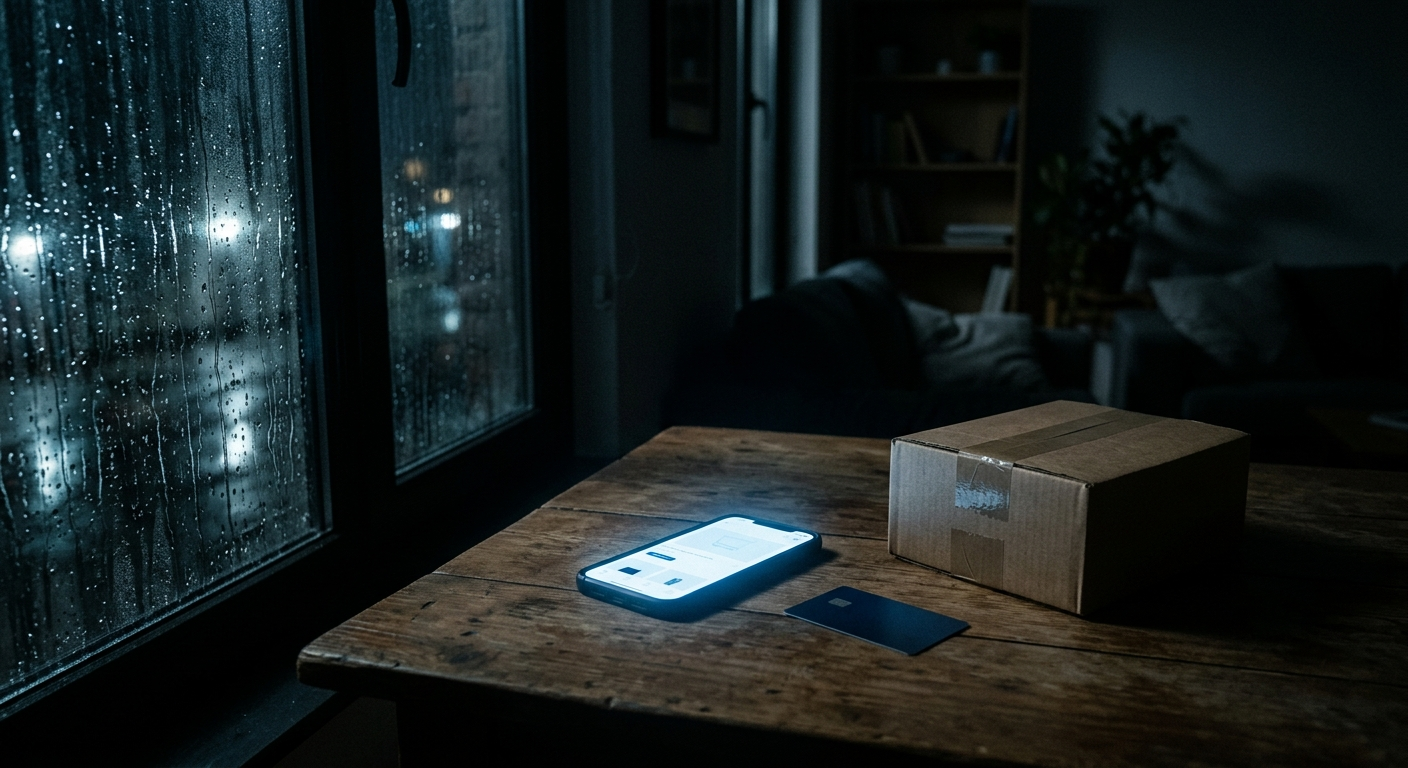
When life feels unstable, your spending can start sounding different.
Less like "I really want this" and more like "honestly, why not?"
The week has been heavy. The news is draining. Work feels shaky. Your nervous system is already carrying too much. Then something small appears in your feed or your cart and the purchase suddenly feels weirdly reasonable.
Not because the item matters that much.
Because buying it gives you a quick hit of relief, control, or pleasure in a moment when the future feels foggy. That is the logic of doom spending: when the future feels shaky, buying something becomes a fast way to feel solid right now.
It does not always look dramatic. Sometimes it is a series of small treats, late-night orders, or "might as well" upgrades that seem harmless on their own. But the pattern can quietly drain money because the purchase is doing emotional work the object cannot really finish.
What is doom spending?
Doom spending is when anxiety, uncertainty, or future pessimism pushes you toward spending now for comfort, control, or a sense of immediate reward. It is the same brain state as doomscrolling, pointed at a checkout button.
The purchase can be practical-looking. It can even be cheap enough to defend. But the emotional engine underneath it sounds something like this:
- "Everything feels stressful anyway."
- "I need something good right now."
- "The future is such a mess that saving this money barely feels real."
- "At least this will make today feel a little better."
That is why doom spending can be hard to catch. It is not always driven by excitement. A lot of the time it is driven by low-grade dread.
It is a cousin of revenge spending, not the same loop. Revenge spending starts in defiance: "I held back, I sacrificed, I deserve this back." Doom spending starts in helplessness: "Everything feels unstable anyway, so why not." They can meet at the same checkout, but the sentence running in your head is different.
Why anxiety about the future turns into spending now

Most people do not doom-spend because they are careless. They do it because the brain gets more present-focused when it feels unsafe.
When your mind is overloaded, uncertain, or mentally bracing for bad news, long-term thinking gets weaker. Immediate comfort starts to feel more valuable. The future stops feeling vivid enough to compete.
A few forces usually show up together.
1. Anxiety makes now feel more urgent than later
When you feel shaky, your nervous system wants something it can resolve quickly.
Buying gives you a decision, a hit of movement, and a brief sense of closure. For a minute, you are not floating in uncertainty anymore. You did something.
2. Bleak moods shrink the value of restraint
Saving money depends on a relationship with your future self.
If the future feels distant, depressing, or hard to picture, restraint loses some of its emotional reward. That is when "I should save this" can get overpowered by "I need one decent thing today."
3. Spending can mimic control
A lot of doom spending is not really about wanting more stuff. It is about wanting a pocket of agency.
You cannot control the economy, your boss, the housing market, or the tone of the week. But you can press buy. That tiny act can feel stabilizing, even if the feeling does not last.
4. Digital shopping makes anxious spending frictionless
If you are already stressed, online shopping is perfectly built to meet you there.
It is fast. It is private. It lets you move from feeling bad to imagining relief in seconds. Add one-click checkout, saved cards, free-shipping thresholds, and pay-later options, and anxious spending barely has to survive any resistance at all.
Signs you're in a doom spending moment
Doom spending has a particular emotional texture. It often feels flatter and darker than ordinary impulse buying.
Here are a few clues.
The thought in your head is "might as well"
This is the classic one.
You are not exactly thrilled. You are tired, over it, or a little numb. The purchase feels acceptable because saying no seems emotionally pointless.
You want relief more than the item itself
If the product disappeared and what you would miss most is the temporary mood shift, that is a clue.
The real thing you are chasing may be a break in the emotional weather, not the object.
You are shopping late, low, or overloaded
Doom spending often shows up when your brain has less room to think clearly: at night, after too much scrolling, after bad news, after work stress, or when you already feel mentally flooded.
The purchase feels small enough to excuse
A lot of doom spending hides inside sentences like:
- "It's only twenty bucks."
- "I've had worse habits than this."
- "This is the one thing getting me through the week."
- "At least it's not something bigger."
Small purchases can still become a pattern when they are repeatedly used to self-soothe.
How to stop doom spending before checkout
You do not need to bully yourself out of the urge. Shame usually adds more emotional pressure, which makes the spending loop easier to restart.
What works better is making the moment more honest.
Name the pattern clearly
Try this sentence:
"I want to buy this, but I may also be trying to soothe uncertainty."
That sentence is simple, but it matters. It separates the item from the feeling.
Ask what problem the purchase is trying to solve
Before you buy, ask:
- Am I trying to calm down?
- Am I trying to feel some control?
- Am I reacting to stress, bad news, or a bleak mood?
- Would this still feel important if I felt rested and steady?
You are not interrogating yourself. You are just trying to identify the real job you are assigning to the purchase.
Delay the decision on purpose
Doom spending feeds on emotional immediacy. A little time changes the chemistry.
Put the item on a list. Close the tab. Set a reminder for tomorrow. Walk away long enough for the anxious logic to cool.
If you still want it when your nervous system is quieter, you can come back and decide with more clarity.
Change your state before you change your budget
Sometimes the smartest money move is not a money move first.
If you are doom spending because your body feels overloaded, try something that lowers the signal a little: get off the screen, eat something real, take a short walk, shower, message someone, or go to sleep.
That does not solve life. But it can stop you from outsourcing your emotional regulation to checkout.
Make digital buying less automatic
If doom spending tends to happen online, add friction where the urge usually wins.
Delete saved cards. Move shopping apps off your home screen. Leave items in a pause list instead of your cart. Make it slightly more annoying to buy while anxious.
That extra inconvenience is often enough to let the spell break.
Use work-hours framing to bring the purchase back to reality
One reason doom spending gets traction is that the cost stays abstract.
A purchase looks small in dollars, especially when you are stressed. It feels very different when you convert it into time.
That $48 order is not just forty-eight dollars. It might be more than an hour of your working life. Maybe two. Maybe more, depending on what you actually take home.
That changes the question.
Instead of asking, "Will this make me feel better right now?" you start asking:
- Do I want to trade this much of my life for this item?
- Am I buying something useful, or buying a temporary emotional shift?
- Will this still feel worth the work hours once the mood passes?
That is a calmer frame. It does not shame the purchase. It just makes it real again.
If you want help doing that in the moment, paus gives you a simple way to translate price into work hours and put a purchase on pause before anxiety makes the decision for you.
What to do if you've already doom-spent
Do not turn the purchase into proof that you are bad with money.
That story is satisfying for about ten seconds and useful for zero.
A better reset looks like this:
- Write down what was happening right before you bought it.
- Name the mood as specifically as you can: anxious, hopeless, restless, depleted, numb.
- Ask what the purchase promised you.
- Ask what it actually delivered, and for how long.
- Notice the sentence that made the checkout feel justified.
Usually there is a repeatable script hiding in there.
Maybe yours is: "Nothing feels good, so I need one small thing." Or: "The future feels unstable, so saving this barely matters." Once you can hear the line, you can catch it earlier.
The goal is not to become joyless. It is to stop letting dread spend for you.
Doom spending is not really about loving stuff too much. A lot of the time, it is about feeling too much uncertainty and wanting one fast, concrete answer.
That is human.
But a checkout button is a weak tool for fear, burnout, or existential fog. It can give you movement. It can give you anticipation. What it usually cannot give you is the steadier feeling you were actually looking for.
You do not need more guilt. You need more space between the mood and the money.
If you want a calmer way to create that space, try paus. It helps you catch the "might as well" moment, see what a purchase really costs in work hours, and slow the decision before it turns into regret.
FAQ
Is doom spending the same as emotional spending?
It is a specific flavor of it. Emotional spending is the broad category: buying to change how you feel. Doom spending is the version driven by uncertainty and future dread, where the purchase is less about excitement or sadness and more about wanting one thing to feel solid when the future does not.
Is doom spending the same as revenge spending?
No. Revenge spending comes from feeling deprived: you held back for a long time, and a purchase feels like getting something back. Doom spending comes from feeling unstable: the future looks foggy, so buying now feels like the only relief that still works. One is defiance. The other is resignation.
Why do I spend more when life feels uncertain?
Because uncertainty makes the brain value immediate relief more heavily. Saving and restraint depend on a future that feels emotionally real. When that future feels foggy, comfort now can start winning too easily.
Is doom spending always about big purchases?
No. It is often small and repeatable. That is part of why it slips under the radar. A series of small mood-repair purchases can still add up fast.
What helps in the moment?
Name the pattern, step away from checkout, and turn the price into work hours. That combination often gives you enough distance to decide with a clearer head.