
How to Stop Impulse Buying Skin Care Products Online
Skin care shopping can feel practical, hopeful, and almost healthy, which is exactly why it gets expensive fast. Here is how to stop buying products you do not need and interrupt the loop before another checkout turns into clutter.

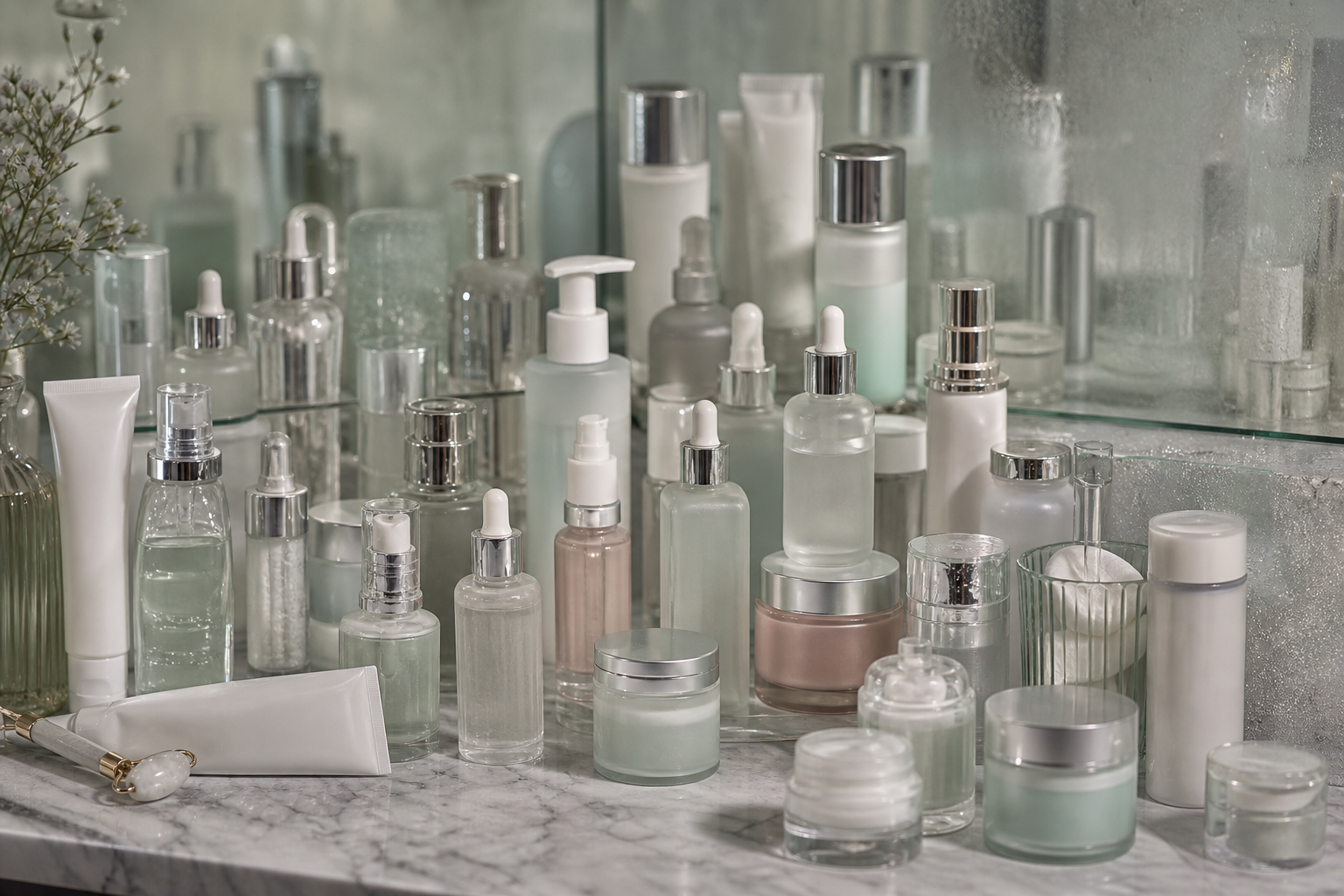
Skin care is one of the easiest things to overspend on while telling yourself you are being responsible.
That is part of what makes it tricky.
The purchase does not feel random.
It feels useful.
You are not buying sequins for a party you are not going to.
You are buying something that might calm the breakouts, smooth the texture, fade the mark, fix the dryness, protect the barrier, or finally make you consistent.
So the order feels smart.
Hopeful.
Maybe even healthy.
Then a few weeks later, the package joins the others.
Another cleanser. Another serum. Another backup of something you have not even finished. Another routine you were sure you were about to become the kind of person who follows.
If you keep impulse buying skin care products online, the problem is usually not that you are shallow or bad with money.
It is that this category is very good at blending emotional hope with practical justification.
Once you see that more clearly, it gets easier to stop.
Why skin care shopping feels so rational
A lot of impulse purchases announce themselves as indulgent.
Skin care often does the opposite.
It arrives dressed as maintenance, discipline, or self-respect.
That changes the whole emotional feel of the decision.
You are not just buying a product. You are buying the possibility of feeling more in control.
You are often buying hope before you are buying results
Most skin care shopping is not about what the bottle is doing right this second.
It is about what you imagine it might do soon.
Clearer skin.
Less irritation.
A fresher face.
A version of yourself who finally has a routine that looks steady and adult and under control.
That future-facing hope is powerful.
It can make a product feel worth buying before it has earned anything.
That is why skin care spending can overlap with buying things for your fantasy self. The fantasy is just packaged as self-improvement instead of pure indulgence.
The category turns insecurity into a shopping plan
If something about your skin is bothering you, the discomfort has a target.
Redness. Texture. Acne. Dryness. Dullness. Dark marks. Fine lines.
That makes the urge easier to justify.
The purchase feels like action.
It feels better to say "I am fixing this" than to sit with the slower truth that not every skin problem needs a new product, and not every frustration can be solved by more steps.
Reviews make the product feel pre-approved
Skin care shopping is especially persuasive online because the whole environment suggests evidence.
There are ingredient breakdowns.
Before-and-after photos.
Routine videos.
Comments from people who seem to have your exact problem.
A product can start to feel less like a maybe and more like a near-certainty.
That is part of why targeted ads can keep a weak desire alive. You see the same cleanser, essence, or serum enough times that it stops feeling like marketing and starts feeling like research.
What you may really be buying
If you want to spend less on skin care, it helps to ask what the purchase is doing emotionally.
Because it is often doing more than one job.
A sense of progress
Buying something can create the feeling that you are already improving.
You have not changed the routine yet.
You have not used the product long enough to know anything.
Still, checkout gives you a little hit of movement.
Now there is a plan.
Now something is on the way.
Now it feels like the problem is being handled.
That feeling can be addictive when you are frustrated with your skin or tired of not seeing quick results.
Relief from uncertainty
Skin can be messy.
Some weeks it behaves. Some weeks it does not. A product that worked once stops working the same way. Stress shows up on your face. Hormones show up on your face. Sleep shows up on your face.
Shopping can make that uncertainty feel simpler.
Instead of sitting with "I do not fully know what is going on," you get to convert the discomfort into a concrete decision: should I buy this or not?
That is emotionally cleaner, even if it gets more expensive.
The feeling of becoming someone more put together
This part matters more than people admit.
Sometimes the product is not only about your skin.
It is about the version of you who has a neat bathroom shelf, a stable routine, and one of those calm lives where things seem maintained before they become a problem.
That does not make you vain. It makes you vulnerable to a category that sells improvement as identity.
Signs the skin care loop is running your spending
Not every online skin care purchase is impulsive.
Sometimes you are replacing something you already use and actually need.
The pattern is different when shopping starts doing more work than the routine itself.
You have duplicates in the same category
Multiple cleansers.
Three exfoliants.
Four lip products in slightly different packaging.
A backup for something you have barely opened.
That usually means the buying is outrunning the using.
You keep restarting your routine instead of following one
A lot of overspending hides behind the phrase "I am building a routine."
But if the routine changes every time a new product appears, the buying may be interrupting consistency rather than helping it.
You spend more time researching products than using what you have
At some point, browsing becomes its own hobby.
You compare ingredients, watch reviews, read comment sections, and fill carts while your current products sit half-used in a drawer.
That is a clue that the shopping is giving you stimulation or reassurance, not only better skin.
The product feels urgent until it arrives
Before checkout, the item feels like the missing piece.
After delivery, it can feel oddly ordinary.
That drop often means you were buying anticipation as much as function.
You keep telling yourself the next product will make you finally be consistent
This one stings because it sounds so reasonable.
But consistency usually comes from a simpler routine, not a more exciting cart.
How to stop impulse buying skin care products online
You do not need to become harsh or joyless about this.
You need a calmer process between wanting and buying.
1. Make all nonessential skin care purchases wait until daylight
This helps because skin care urges often ride on mood.
A flare-up, a bad skin day, an ad, a review spiral, a stressful evening. Suddenly the product feels necessary right now.
Give it one night.
Or at least a few hours.
Tell yourself: I am allowed to want this. I am just not buying it in the same emotional wave that made it feel urgent.
That single pause is often enough to reveal whether the product is a real need or just a fresh hope spike.
2. Inventory what you already own before checkout
Do not trust the vague feeling that you are low on everything.
Check.
Look at the shelf, drawer, bag, or basket.
Ask:
- do I already own something that does this job?
- have I even finished one version of this category before?
- am I replacing, duplicating, or experimenting again because I am impatient?
A lot of skin care spending survives on abstraction.
Inventory brings the decision back into reality.
3. Use a category rule
Skin care gets easier when the decision is not invented from scratch every time.
Try rules like:
- no backups until the current one is almost empty
- one active product per category at a time
- one-in, one-out for cleansers, serums, and masks
- no buying from ads
- no new routine changes during a breakout panic
The point is not to become rigid.
It is to stop making every product sound special enough to escape your usual judgment.
4. Name the hope you are trying to buy
Before you add to cart, ask one honest question:
What am I hoping this gives me besides the product itself?
Maybe the answer is:
- clearer skin before an event
- relief from frustration
- a feeling of getting back on track
- proof that I am taking care of myself
- the fantasy of waking up more put together
That answer matters.
Because once you can name the hope, the product often stops looking like the only way to get it.
5. Translate the price into work hours
This is where a lot of skin care decisions change shape.
A serum can feel small when it is framed as beauty, wellness, or maintenance.
It feels different when you ask how much of your life it costs.
Not only the one serum.
The serum plus the backup plus the shipping threshold add-on plus the next thing you buy because this one was "close but not quite right."
Instead of asking only "Could this help?" ask:
- how many hours of my life does this cost?
- would I still want it if I had to feel that time clearly right now?
- am I buying treatment, or am I buying relief from how I feel about my skin today?
That is exactly where paus helps. It slows the moment down, turns prices into work hours, and gives you a little distance before a hopeful mood becomes another checkout.
6. Let your routine get boring
This sounds small, but I really mean it.
A good skin care routine is often a little boring.
That is not failure.
That is stability.
The shopping loop survives on novelty. New launch. New ingredient. New before-and-after. New promise that this one is smarter, cleaner, stronger, gentler, or more grown up than the last one.
Better skin usually comes from patient repetition, not constant reinvention.
If your routine is working well enough, boredom may be a sign to stay put, not shop.
What to do instead when the urge hits
If buying skin care has become a quick way to feel proactive, you need another way to create that feeling.
Try one of these first:
- write down the product and revisit it in 48 hours
- wash your face and use what you already own before shopping for more
- take a photo of your current shelf so you remember the reality, not the fantasy
- make a short list called "products I finish before I buy anything new"
- step away from review content for the rest of the day
These are not dramatic fixes.
That is fine.
Impulse loops usually break through simple interruptions, not grand speeches.
The goal is not perfect restraint. It is clearer buying.
You do not have to stop caring about skin care.
You do not have to pretend every product is frivolous.
You just want the purchase to come from clarity instead of frustration, hope spikes, or self-improvement panic.
That is a very different kind of decision.
If you keep impulse buying skin care products online, the useful question is not "Why am I like this?"
It is "What does this purchase keep promising me?"
Once you can answer that, the spell gets weaker.
And if you want help creating that pause in real time, try paus. It helps you slow the moment down, see the price in work hours, and choose from a steadier place before another product joins the pile.
FAQ
Why do I keep buying skin care products I do not need?
Because skin care purchases often feel practical and hopeful at the same time. A new product can feel like progress, control, or relief before it has done anything yet, which makes it easier to justify impulse buys.
How do I stop impulse buying beauty products online?
Start by delaying the purchase, checking what you already own, and using category rules so every new product does not get treated like an exception. It also helps to turn the price into work hours so the cost feels concrete again.
Is buying too much skin care a form of emotional spending?
Often, yes. The spending may be tied to frustration, insecurity, hope, or the feeling that you need to fix something quickly. That does not mean the skin concern is fake. It means the purchase may be doing emotional work too.
Why does new skin care feel so exciting before it arrives?
Because you are often buying anticipation along with the product. The order creates a story about improvement, relief, and future consistency. That emotional lift can fade once the item becomes just another bottle on the shelf.