
Why Do I Keep Buying Backups of Things I Haven't Finished?
If you keep buying the next bottle, jar, notebook, candle, or supplement before you finish the one you already have, the pull may be less about practicality and more about relief, control, or future-self optimism.

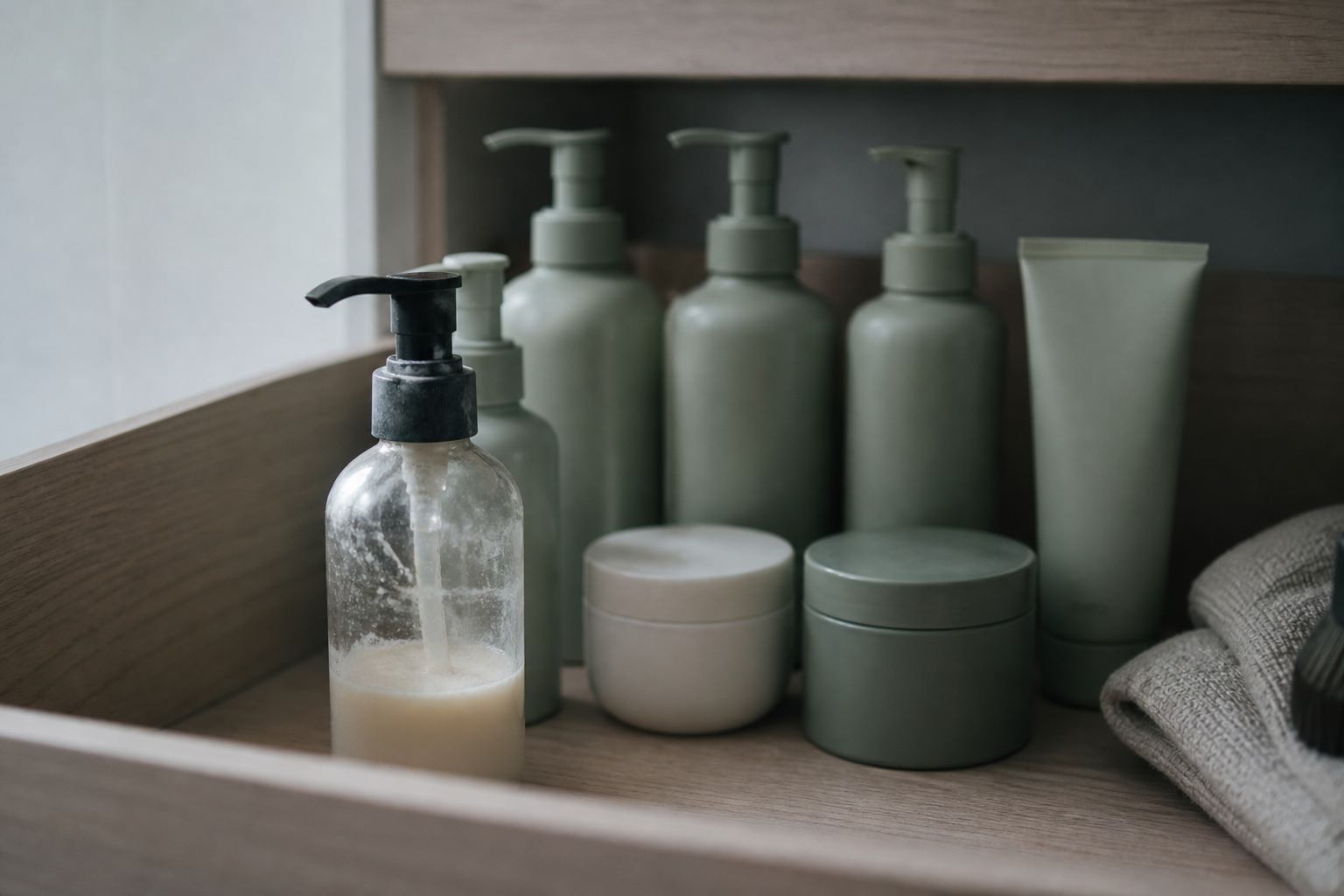
Sometimes the backup looks completely reasonable.
You are not buying something wild. You are buying another cleanser before the current one is empty. Another notebook before the first one is even half full. Another candle, supplement, pantry staple, or backup tube of something you already own.
That is part of what makes this pattern slippery. It does not always feel like impulse buying. It can feel responsible. Prepared. Efficient. Even a little smart.
Then you open a drawer and realize you have three versions of the same thing. Or you find a product that expired before you touched it. Or you notice that your house is full of future replacements for a life that has not happened yet.
If you keep buying backups of things you have not finished, you are probably not just being careless. Usually there is a reason the purchase feels calming in the moment.
Why backup buying can feel so practical
A backup purchase often comes with a built-in excuse. You are not "wasting" money. You will use it eventually. The item is familiar. It may even be on sale.
That logic is what makes the habit easy to miss.
It feels safer than buying something new
Backup buying often rides on familiarity. You already know the product. You already approved it once. So the next purchase feels less risky than a random impulse buy.
Your brain can treat that familiarity like proof that the decision is solid, even when the timing makes no sense.
It creates a small feeling of control
Running low on something can trigger more tension than people realize. Even if the product is not urgent, replacing it early can make you feel ahead of life for a minute.
That is especially true when other parts of life feel messy, overloaded, or uncertain. The backup becomes a quiet signal that at least one thing is handled.
It hides inside "being prepared"
This can overlap with buying things to feel prepared, but backup buying has its own flavor. The promise is not only "I will be ready." It is also "I will not have to think about this later."
That makes the purchase feel efficient, even if you are really buying relief from a tiny future inconvenience.
Common places this pattern shows up
This habit tends to cluster around repeat-use categories where the next purchase feels harmless.
Skin care, beauty, and toiletries
Moisturizer, shampoo, lip balm, body wash, sunscreen, serums, razors.
These are easy to justify because they are personal-care basics. If there is a sale, a bundle, or a "buy before you run out" fear, the purchase can feel almost automatic.
Pantry and household supplies
Coffee, snacks, spices, cleaning products, paper goods, vitamins, supplements.
Sometimes this starts as convenience. Then it slowly turns into low-level stockpiling, especially when every item seems too small to matter on its own.
Stationery and "fresh start" items
Notebooks, planners, pens, storage bins, labels.
This category can blend with buying things to motivate yourself. The backup is not just practical. It quietly suggests that the next version of the routine will be cleaner than the current one.
Comfort items and little luxuries
Candles, teas, hobby supplies, backup treats, favorite basics.
These purchases can feel harmless because they are familiar and emotionally soft. But they can still add up, especially when the next one appears before the current one has even had a real life.
What is usually going on underneath
The product may be ordinary, but the emotional job can be bigger than it looks.
You are trying to reduce future friction
A lot of backup buying is really friction buying. You do not want to run out. You do not want one more errand. You do not want one more thing on your list.
So you solve the future problem early. The purchase gives you a quick sense that later-you is protected.
Scarcity thinking sneaks in
Sales, limited stock messages, bundle pricing, and "only a few left" cues can make ordinary products feel temporarily urgent.
That is why backup buying often overlaps with why discount codes make you spend more than you save. The logic sounds like savings. But sometimes you are spending now to avoid the discomfort of possibly paying more later.
The next version feels cleaner than the current one
There is also a future-self story in the background. The next jar will be the one you use consistently. The next notebook will be the one you keep neat. The next supplement order will be the start of your healthier routine.
That is close to buying things you already have and buying things for your fantasy self, but backup buying is more specific. You already own the category. You are just emotionally leaning toward the fresh copy because it feels easier than dealing with the current one.
Real restocking vs anxious stockpiling
Not every backup purchase is a problem. Sometimes buying early is sensible.
The difference is less about the category and more about the timing and feeling around it.
Real restocking usually looks like this
- you are actually close to running out
- the item gets used consistently
- you know roughly when the replacement will be needed
- you would buy it at full price too, not only because the sale created urgency
Anxious stockpiling usually sounds more like this
- "I might as well grab it now"
- "I do not want to think about this later"
- "It is on sale, so it would be dumb not to"
- "Maybe this new one will get me back on track"
One is planning. The other is often emotional relief dressed as practicality.
How to interrupt the purchase before checkout
You do not need a dramatic no-buy rule for this. Usually you just need a little friction between the urge and the cart.
1. Check how much of the current item is actually left
Not what you imagine. What is really left.
Open the drawer. Pick it up. Look at it. A surprising number of backup purchases happen while the current version is still very much alive.
2. Ask what feels uncomfortable about waiting
This question matters. If the item is not close to finished, what exactly feels bad about not buying it today?
Is it fear of running out? The discomfort of forgetting later? The sale ending? The feeling that later-you will be more responsible if you buy now?
The answer is usually more useful than the product page.
3. Use a replacement rule
Give yourself a simple threshold. For example:
- no backup until the current item is 80 percent used
- no replacement until one is opened, not just owned
- no pantry refill unless there is a real gap, not just a discount
A rule like this keeps every decision from becoming a new debate.
4. Translate the "small" purchase into work hours
This is where the habit gets more honest. A backup lip balm, another supplement bottle, or one more familiar household item may not feel expensive alone. But these are often repeat purchases that stack quietly.
When you convert the price into work hours, the purchase stops looking like "just a little extra." It becomes time from your life.
That is where paus can help. It gives you a place to stop, see what the purchase costs in work hours, and decide whether you are solving a real need or just buying a moment of relief.
5. Keep a "finish first" list
Write down the categories where this happens most. Maybe it is skin care. Maybe it is candles. Maybe it is stationery or supplements.
Then make the goal visible: finish one before buying the next. Not forever. Just once. That small shift can expose how much of the urge comes from novelty, sale pressure, or emotional reset.
When buying the backup actually makes sense
Sometimes the right answer is yes.
A backup is usually reasonable when:
- the item is used consistently and nearly gone
- replacing it later would create a real problem, not a minor annoyance
- you are not buying because of a fantasy version of yourself
- the quantity fits your actual pace of use
That last point matters. Buying two years of optimism for a product you use sporadically is usually not saving money. It is storing pressure.
A gentler way to understand the habit
If you keep buying backups of things you have not finished, the pattern is probably not random. A lot of the time, you are trying to buy certainty, reduce future friction, or create the feeling that life is under control.
That is understandable. But understandable does not always mean useful.
Sometimes the calmer move is to stay with the unfinished thing in front of you. Use what is already open. Let the sale pass. Let later-you handle one ordinary purchase later. That may sound small, but it is often how you loosen the grip of autopilot spending.
If you want help catching those low-drama purchases before they pile up, try paus. It can help you pause, see the real cost in work hours, and decide whether the backup belongs in your cart at all.
FAQ
Why do I keep buying backups of things I already own?
Often because the purchase feels practical and low-risk. But underneath that, you may be trying to reduce future friction, respond to sale pressure, or buy a small sense of control.
Is buying backups a form of impulse buying?
It can be. Some backup purchases are planned and sensible. Others happen quickly because the item feels familiar, justified, or temporarily urgent.
How do I stop buying replacements before I need them?
Check what is actually left, use a replacement threshold, question the discomfort of waiting, and translate the cost into work hours before you buy.
When is it okay to buy a backup?
Usually when the item is used consistently, almost finished, and the replacement solves a real need rather than an emotional one.