
Why You Shop When You're Bored (and How to Stop)
A calm guide to why boredom turns into online shopping, what the urge is really looking for, and how to stop buying random things just to feel something.

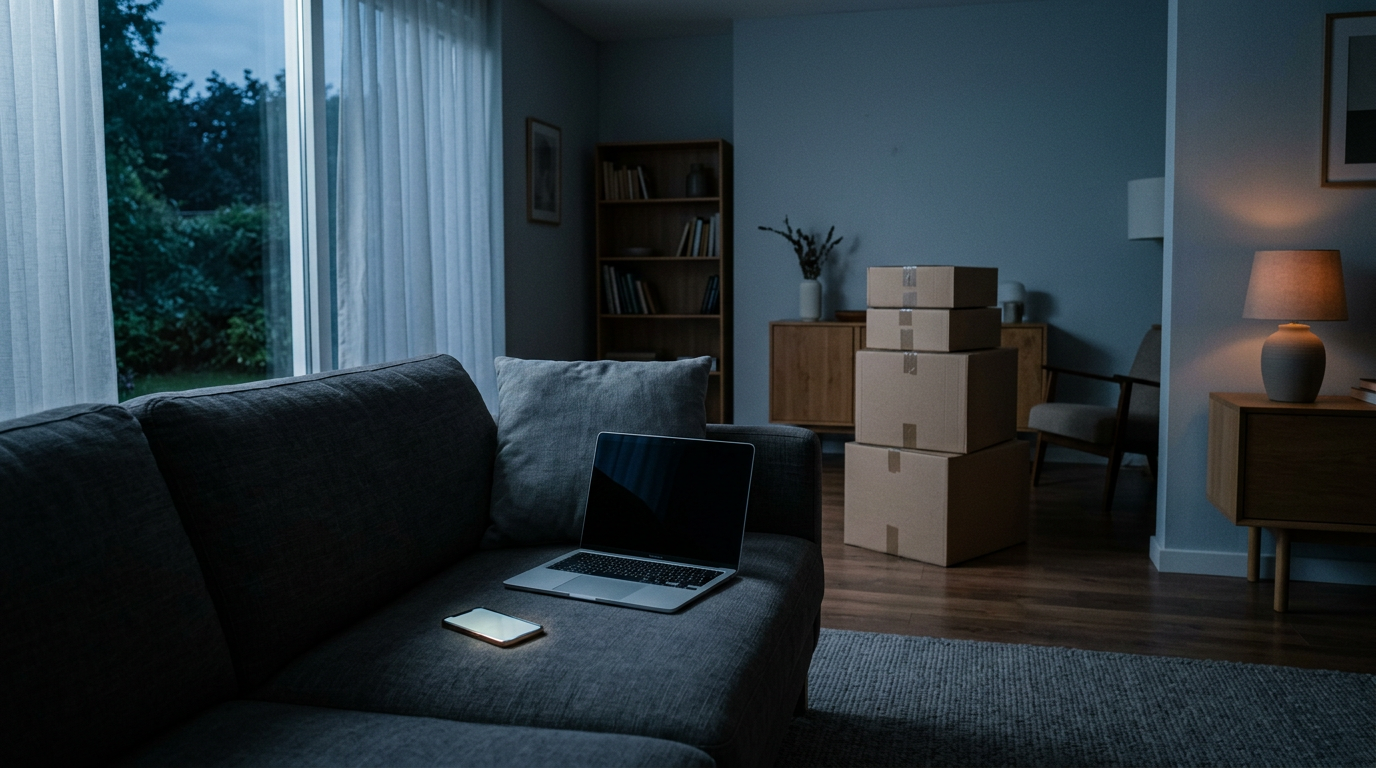
Boredom shopping rarely starts with a strong desire for the item.
It usually starts with a dead little stretch of time.
You are on the couch. Between tasks. Half-paying attention. A little under-stimulated, a little restless, maybe a little flat. You open your phone to kill a minute, and twenty minutes later you are comparing candles, sneakers, storage bins, skincare, or some oddly specific thing you did not care about earlier.
Then the cart appears. Then the tiny rush. Then, later, the familiar question: Why did I buy that?
If you shop when you are bored, you are not being irrational. You are usually trying to change your state.
Shopping gives boredom something it does not have: novelty, anticipation, movement, and the feeling that something is happening.
Think of it as a stimulation gap. Boredom is an appetite for something happening, and shopping is a fast way to feed it. That is why the urge can feel real even when the item is not.
Why boredom turns into shopping so easily
Boredom is more than having nothing to do. It often feels like low-grade discomfort.
Your brain wants stimulation. It wants a shift. It wants a tiny reward.
Online shopping is very good at offering all three, which is part of why it feels so hard to resist.
There is endless novelty. New products, new colors, new recommendations, new tabs, new little possibilities. You do not even need to buy anything at first. Browsing alone already changes the mood.
That matters because boredom is not always about the object in front of you. Sometimes it is about wanting emotional movement.
A shopping app can provide that movement fast. You scroll, compare, imagine, save, maybe add to cart. Suddenly the moment feels less empty.
The problem is that stimulation can slide into spending before you fully notice. Browsing feels harmless. Then a purchase sneaks in behind it.
What boredom shopping usually feels like
Boredom shopping often has a different texture than buying something you actually need.
It can feel random. Drifty. Low-stakes. You are not usually thinking, I need this for my life. You are thinking, Let me just look. Let me see what is out there. Let me have a little something to focus on.
Sometimes the item barely matters. The process matters more.
That is why people can end up buying things that seem strangely disconnected from real priorities. A gadget you did not research. A sale item you would never have searched for directly. A duplicate of something you already own. A small treat that felt harmless until five other small treats happened the same week.
Boredom shopping is often less about need and more about filling an empty mental space.
It is worth telling this apart from its close relatives, because the fix is different. When the flatness is really loneliness, the shopping is looking for company, not stimulation. When a task is waiting and shopping keeps you away from it, that is procrastination shopping, a different loop with a different off-ramp. With boredom, there is no task. There is just a stretch of time with no shape.
7 signs the purchase is about stimulation, not need
You do not need every sign. Two or three is often enough.
1. You were not thinking about the item before you started scrolling
If the desire only appeared after ten minutes of browsing, the shopping environment may have created the want.
2. You feel more attached to the hunt than the item
Sometimes the fun part is searching, comparing, and imagining. Once the item is actually yours, the charge fades fast.
3. The purchase feels oddly random
It is not something you planned for. It is not solving a real problem. It just became interesting because it crossed your path at the right bored moment.
4. You want a little rush more than ownership
A lot of boredom shopping is really reward-seeking. Checkout gives the moment a hit of energy.
5. You keep telling yourself it is small, so it does not matter
This is how random spending piles up. Each purchase feels tiny and forgettable, but the pattern is not tiny.
6. The urge drops when something else grabs your attention
If a phone call, a walk, a task, or even a snack makes the desire vanish, the item probably was not the point.
7. You regret it mostly because it felt unnecessary, not because it was expensive
That hollow feeling matters. It usually means the purchase did not solve the thing your brain was reaching for.
What to do in the moment instead of buying
You do not need a dramatic rule. Usually you need a small interruption.
Try one of these when you notice the boredom-shopping mood:
- say out loud what is happening: "I am bored and looking for stimulation"
- move the item to a pause list instead of checking out
- close the shopping app and switch to a different source of novelty for ten minutes
- set a short timer before you buy anything non-essential
- ask yourself, "Would I have looked for this if I were not bored right now?"
- make the next action physical: stand up, get water, step outside, fold laundry, anything that breaks the loop
That last part sounds simple, but it works because boredom shopping often lives in passivity. Your body is still. Your thumb is moving. The whole loop stays abstract.
A small physical shift can break the spell.
Why boredom shopping can feel harmless when it is not
People often dismiss this pattern because the purchases can look minor.
A $14 item here. A $28 item there. Something on sale. Something "useful enough." Something you almost bought before.
But boredom spending is sneaky because it does not always feel emotional in the dramatic sense. It can feel casual.
That is exactly why it adds up.
You are not having a crisis. You are just under-stimulated. Which means the spending can keep happening without setting off alarm bells.
That is also why shame is the wrong response. The pattern is not proof that you are reckless. It is proof that modern shopping is very good at turning boredom into browsing and browsing into buying.
Why work-hours thinking helps with boredom spending
Boredom makes purchases feel lighter than they are.
Work-hours thinking adds weight back in. You can see how to turn a price into work hours here.
A random $36 purchase can feel like nothing when you are drifting through an app. It feels different when you realize it costs two hours of work. Or half an evening. Or the part of your day you spent answering emails you did not even want to answer.
That shift helps because boredom shopping depends on vagueness. The item feels casual. The money feels abstract. The decision feels soft around the edges.
Time is harder to blur.
When you turn the purchase into work hours, you bring the decision back into real life. You are no longer asking only, Can I pay for this? You are asking, Is this worth the chunk of my life I traded for it?
That question does not have to make every answer no. It just makes the answer more honest.
A pause is often enough to change the decision
This is where paus fits naturally.
Boredom shopping usually does not need a lecture. It needs a gap.
A gap gives the urge time to cool down. It lets the item stop glowing. It gives your actual preferences a chance to come back.
What looked weirdly compelling in a bored moment can look completely ordinary an hour later.
That is useful information.
If you want a calmer way to stop random browsing from turning into random spending, try paus. It lets you hold the item, come back later, and see what it costs in work hours before you decide.
What to do if boredom shopping is a repeat pattern
If this happens a lot, do not only focus on self-control. Adjust the environment.
You can:
- remove saved payment methods
- log out of shopping apps
- turn off retail notifications
- move shopping apps off your home screen
- keep a "look later" list instead of a cart
- decide on one alternate boredom ritual before you need it
If you keep opening shopping apps even when you do not want anything, the habit loop may be doing the driving, and boredom is just the trigger.
That alternate ritual matters.
If the only fast source of novelty available is shopping, your brain will keep going there. Make something else easy too. A saved reading list. A walk route. A voice note to a friend. A five-minute reset task. A playlist. A puzzle. Anything that gives the moment a shape without costing you money.
Boredom is a feeling. It does not need a package
A lot of unnecessary spending starts in very ordinary moments. Not dramatic stress. Not a meltdown. Just a dull patch in the day where your brain wants something to grab onto.
That is why this pattern is worth understanding.
You are not always buying the item. Sometimes you are buying interruption. Novelty. A tiny event.
Once you see that clearly, the urge gets easier to work with.
And once you stop asking shopping to fix boredom, a lot of random purchases lose their momentum.
If you want a softer way to slow the moment down before boredom turns into checkout, paus can help you pause the item, leave the mood, and come back with a clearer head.
FAQ
Why do I shop when I am bored?
Usually because shopping creates novelty, stimulation, and a small sense of movement. The urge is often about changing your state, not getting the item itself.
Is boredom shopping the same as emotional spending?
It can overlap, but boredom shopping is usually flatter and more restless than stress shopping or relief buying. The common thread is that the purchase is doing emotional work.
Is boredom shopping the same as procrastination shopping?
Not quite. Procrastination shopping is usually about avoiding a task, so the moment is about escaping pressure. Boredom shopping is usually about filling flat time, so the moment is about chasing stimulation. They can overlap, but the interruption differs: name the task you are avoiding in one case, change where you get stimulation in the other.
How do I stop shopping when I am bored?
The most useful moves are small ones: pause before checkout, switch to another source of stimulation, remove saved payment methods, and look at the cost in work hours before buying.
Why does seeing the cost in work hours help?
Because boredom makes purchases feel vague and low-stakes. Work-hours framing makes the trade feel real again.