
Why Do I Keep Buying Coffee Out When I Have Coffee at Home?
If you keep buying coffee out even though you already have coffee at home, the habit is usually not only about caffeine. It may be buying relief, routine, reward, or a break in the day.

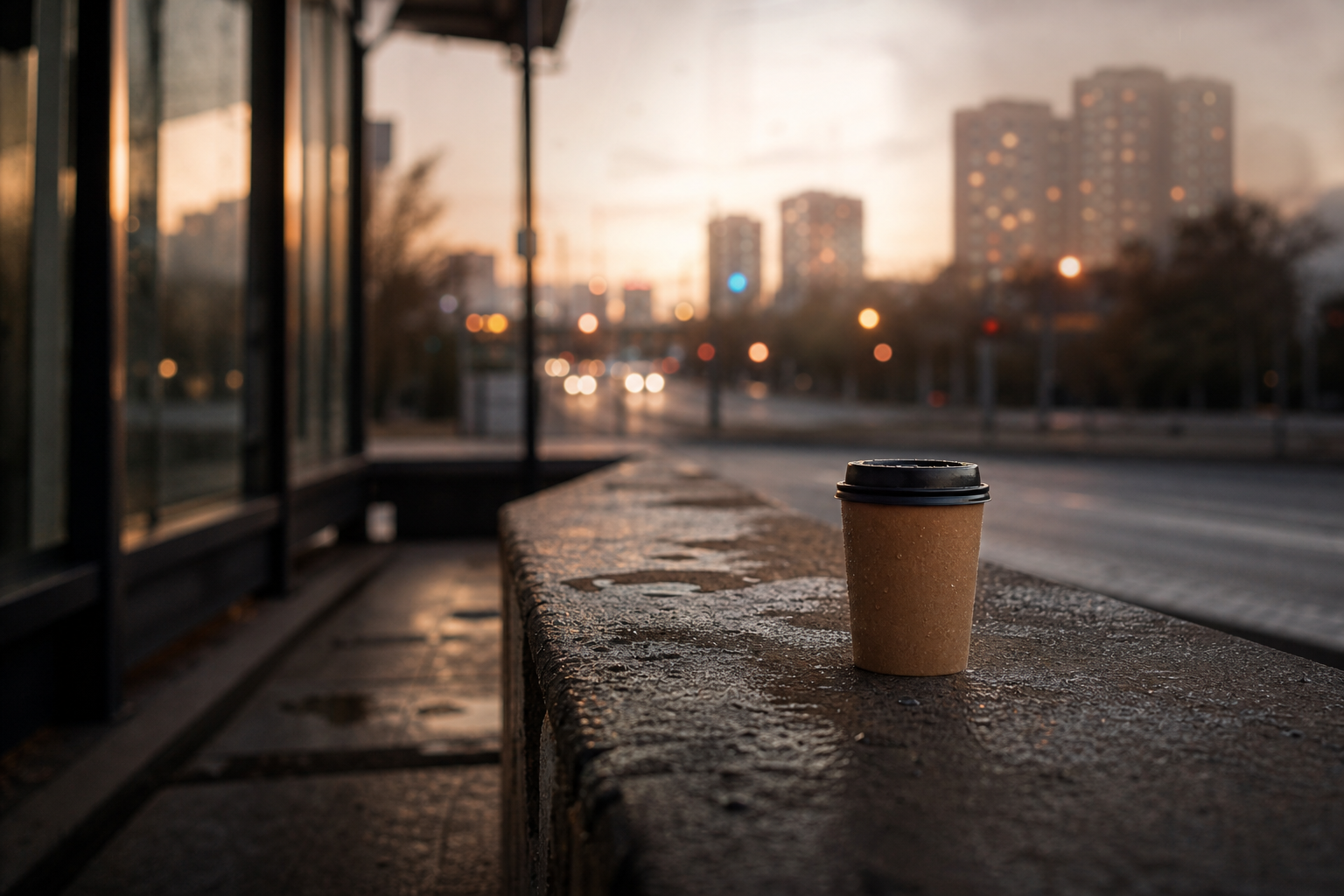
You know there is coffee at home.
You bought the beans. You have the pods. You have the machine, the mug, the milk, the syrup, the backup instant coffee, maybe even the nicer coffee you swore would finally stop this habit.
And yet, at some point in the day, you still end up paying for coffee out.
Maybe on the way to work. Maybe between errands. Maybe when the afternoon starts dragging. Maybe because you are tired, annoyed, unmotivated, or just not in the mood to make one more decision.
Then the thought comes later: Why did I buy that when I literally have coffee at home?
If this happens a lot, the problem usually is not that you are irrational or terrible with money.
It is that buying coffee out is often doing more than making caffeine happen.
It can create a transition. A reward. A small feeling of being taken care of. A reason to leave the house. A tiny mood reset. A break between one version of the day and the next.
Home coffee may exist, but it does not always offer the same emotional job.
That is why this habit can feel strangely stubborn. On paper, the cheaper option is obvious. In real life, the cheaper option may not feel equivalent at all.
Once you can see what you are actually buying, it gets much easier to change the pattern without turning into someone who has to argue with themselves over every latte.
Why coffee at home and coffee out do not feel the same
This is the part people often skip.
They assume the choice is simple: coffee is coffee, so if you already have it at home, buying it out must just be a bad habit.
But for a lot of people, coffee out is not interchangeable with coffee at home.
It may taste better, sure. But that is rarely the whole story.
Coffee out often comes wrapped in context.
Someone else made it. You did not have to clean anything. You get a small moment of novelty. You step into a different environment. The drink arrives as a finished thing instead of another task.
That matters more than people think.
A home coffee can be practical. A bought coffee can feel like relief.
That is part of why small repeat purchases can be hard to interrupt. As Why Small Purchases Don't Feel Like Real Money explains, everyday spending often slips by because each decision feels too minor to deserve a full internal debate.
But the habit stays alive because the purchase keeps solving a real momentary problem.
What you may actually be buying when you buy coffee out
When a habit keeps repeating, it usually helps to ask what the behavior is doing for you beyond the obvious surface reason.
With coffee-shop spending, the answer is often more interesting than caffeine.
1. You may be buying a transition
A lot of coffee purchases happen at in-between moments.
Before work. After school drop-off. Between meetings. After a hard errand. On the way home. At the start of a weekend day when you want to feel like the day has officially begun.
The coffee run creates a bridge. It marks a shift. It gives the day a shape.
Home coffee may technically be available, but it may not create that same sense of movement.
2. You may be buying a reward
Sometimes the drink is a little permission slip.
I got through the morning. I handled that meeting. I am tired. I deserve something. The day feels heavy and I want one nice thing.
That logic overlaps with How to Stop Rewarding Yourself With Shopping. The purchase can become a fast, reliable way to create a small emotional lift.
The issue is not that rewards are bad. The issue is when spending becomes your default delivery system for them.
3. You may be buying relief from effort
This one is very common.
Making coffee at home may sound simple, but in certain moods it still feels like effort.
You have to get up. Choose the mug. Wash something. Refill something. Deal with the fact that the kitchen is messy. Notice that you are out of milk. Make a decision while already feeling mentally full.
At that point, paying for coffee can feel easier than managing one more micro-task.
That is very close to the pattern in How to Stop Convenience Spending When You're Too Tired to Think. The purchase is not only about pleasure. It is about reducing friction.
4. You may be buying atmosphere
Coffee shops can offer something home coffee does not: energy, music, movement, anonymity, a cleaner environment, or just the feeling of participating in the world.
If your day feels flat, repetitive, or isolating, the outing itself may be part of the appeal.
The drink is only one piece of it.
5. You may be buying a version of yourself
Sometimes coffee out carries identity.
It can feel like being productive, urban, social, put together, or gently indulgent. It can make a workday feel more professional. It can make an ordinary walk feel more deliberate. It can make a hard morning feel a little less chaotic.
That may sound small, but identity spending often hides inside very normal habits.
Signs the habit is more about ritual than caffeine
Not every bought coffee is a problem. Sometimes you just want a good coffee and that is fine.
The pattern becomes more useful to notice when the habit is running on autopilot.
Here are a few signs.
You buy coffee even when the coffee itself is not that good
If the drink is forgettable but you keep doing it anyway, the purchase is probably carrying something else. Maybe a pause. Maybe a walk. Maybe a reset.
The urge shows up at the same emotional moments
Maybe it hits when you are tired, running late, unmotivated, restless, or mildly annoyed. Maybe it appears when you need a break from home, work, caregiving, or your own thoughts.
If the urge tracks your state more than your caffeine need, that tells you a lot.
Home coffee sounds available, but not appealing
This is a clue people often miss.
If home coffee exists but feels deeply unconvincing in the moment, ask why. Is it the taste? The cleanup? The atmosphere? The fact that making it keeps you in the same mood and place you are trying to escape?
The purchase feels tiny enough to excuse every time
It is only a few dollars. It is just today. It is just one small treat. It is not like I bought something huge.
That is how repeated small spending stays invisible. One yes rarely feels serious enough to challenge, especially when the purchase offers immediate comfort.
You feel slightly silly afterward, but still do it again
That usually means the habit makes emotional sense in the moment even if it does not hold up later.
Why this habit adds up faster than it feels like it should
Coffee-shop spending is one of those habits that stays slippery because the numbers are small enough to blur.
A single coffee may not feel dramatic. But repeat spending almost never arrives emotionally as a monthly total. It arrives as a series of harmless-seeming moments.
That is why a lot of people are more honest about a big purchase than a daily one. A big purchase demands attention. A small repeating purchase can hide inside mood, routine, and convenience.
This is also why the habit can feel so personal. It is woven into your real day. Your commute. Your tiredness. Your errands. Your wish for one pleasant thing before the next obligation.
You are not only fighting math. You are interrupting a ritual.
How to interrupt the habit without making life feel joyless
You do not need a grim all-or-nothing rule.
Usually that just makes the habit feel more loaded. What works better is getting more precise about which part you actually want.
Ask: what am I paying for right now besides coffee?
Try naming the hidden job.
Am I paying for:
- caffeine
- a break
- reward
- convenience
- a change of scene
- time alone
- comfort
- the feeling of starting over
The clearer that answer gets, the easier it becomes to respond with something more intentional.
Keep the ritual, change the format
If what you really want is a transition, build a transition. Take your home coffee on a short walk. Drink it outside. Use a cup you actually like. Play the same playlist you associate with coffee runs. Leave the house for ten minutes without buying anything.
If what you want is atmosphere, try moving the ritual instead of deleting it. Sit somewhere different. Start work from a library once a week. Bring your coffee to a park bench.
The point is not to fake a coffee shop perfectly. It is to stop forcing the purchase to carry every version of relief.
Make the hard part easier at home
If home coffee never wins, look at the friction honestly.
Maybe the coffee setup is annoying. Maybe the beans are bad. Maybe you keep running out of the part you care about. Maybe the kitchen feels chaotic. Maybe the mug situation is weirdly depressing.
This matters. If a lower-cost habit keeps losing, sometimes it is because it is badly designed.
You do not have to optimize your life into a content-creator morning routine. But making the home version slightly nicer and slightly easier can change a lot.
Pre-decide when buying coffee out is worth it
Instead of vaguely trying to be better, make the rule more specific.
For example:
- I buy coffee out when meeting someone, not automatically on solo weekdays
- I get one café coffee on Saturday and enjoy it on purpose
- I do not buy coffee out when I am only trying to escape a mood for ten minutes
- I pause before any second coffee purchase in a day
A specific rule is easier to follow than a floating intention.
Put a pause between urge and purchase
This is where a little friction helps.
Before you order, ask: Would I still want this if I had to wait ten minutes? Would I still want it if the café were farther away? Would I still want it if I had to name what problem it is solving?
That tiny pause can reveal whether the purchase is about real enjoyment or just automatic emotional momentum.
Translate it into work hours sometimes
Not every time. You do not need to become intense about it. But often enough that the cost feels real again.
A coffee can feel too small to count. Thirty coffees rarely do.
That is why How to Turn a Price Into Work Hours Before You Buy can be surprisingly effective. Once a tiny purchase becomes a piece of your time, it stops feeling quite as invisible.
What to do if coffee out is one of your main little treats
This part deserves honesty.
Sometimes the coffee is not a budgeting problem. It is one of the few reliable bright spots in the day.
If that is true, the goal may not be to erase it. The goal may be to stop spending unconsciously on a ritual you actually care about.
That can look like:
- choosing it on purpose instead of defaulting into it
- enjoying fewer coffee-shop purchases more fully
- protecting the café visit you genuinely love and cutting the forgettable autopilot ones
- giving yourself other forms of reward so coffee does not have to do all the emotional work
There is a big difference between a chosen pleasure and a reflex expense.
The real question is not "why can't I just make coffee at home?"
The better question is: what does buying coffee out give me that home coffee does not?
Once you answer that, the habit gets easier to work with.
Because then you are not fighting a drink. You are working with a pattern. A mood. A routine. A need for transition, care, reward, or ease.
That is much more useful than shaming yourself with the obvious fact that there is coffee in your kitchen.
If you want a calmer way to catch that moment before another automatic coffee run turns into another invisible charge, try paus. It helps you slow the purchase down, see what it costs in work hours, and decide whether you want the coffee, the ritual, or the relief.
FAQ
Why do I keep buying coffee out when I already have coffee at home?
Usually because the purchase is doing more than providing caffeine. It may be giving you convenience, a transition, a reward, a change of environment, or relief from effort. Home coffee may be cheaper, but it may not feel emotionally equivalent.
How do I stop spending so much money at coffee shops?
Start by noticing what the habit is doing for you. Then reduce friction at home, pre-decide when café coffee is worth it, and add a short pause before buying. The goal is not to ban coffee. It is to stop buying it automatically.
Is buying coffee every day a bad habit?
Not always. A daily coffee can be a chosen pleasure. It becomes a costly habit when it happens on autopilot, keeps solving emotional moments you have not named, or quietly takes more money than it is worth to you.