
Impulse Spending vs. Impulse Buying: Is There a Difference?
Impulse buying is one visible part of a wider pattern. If money keeps slipping away through small, fast decisions, you may be dealing with impulse spending even when it doesn't look dramatic.

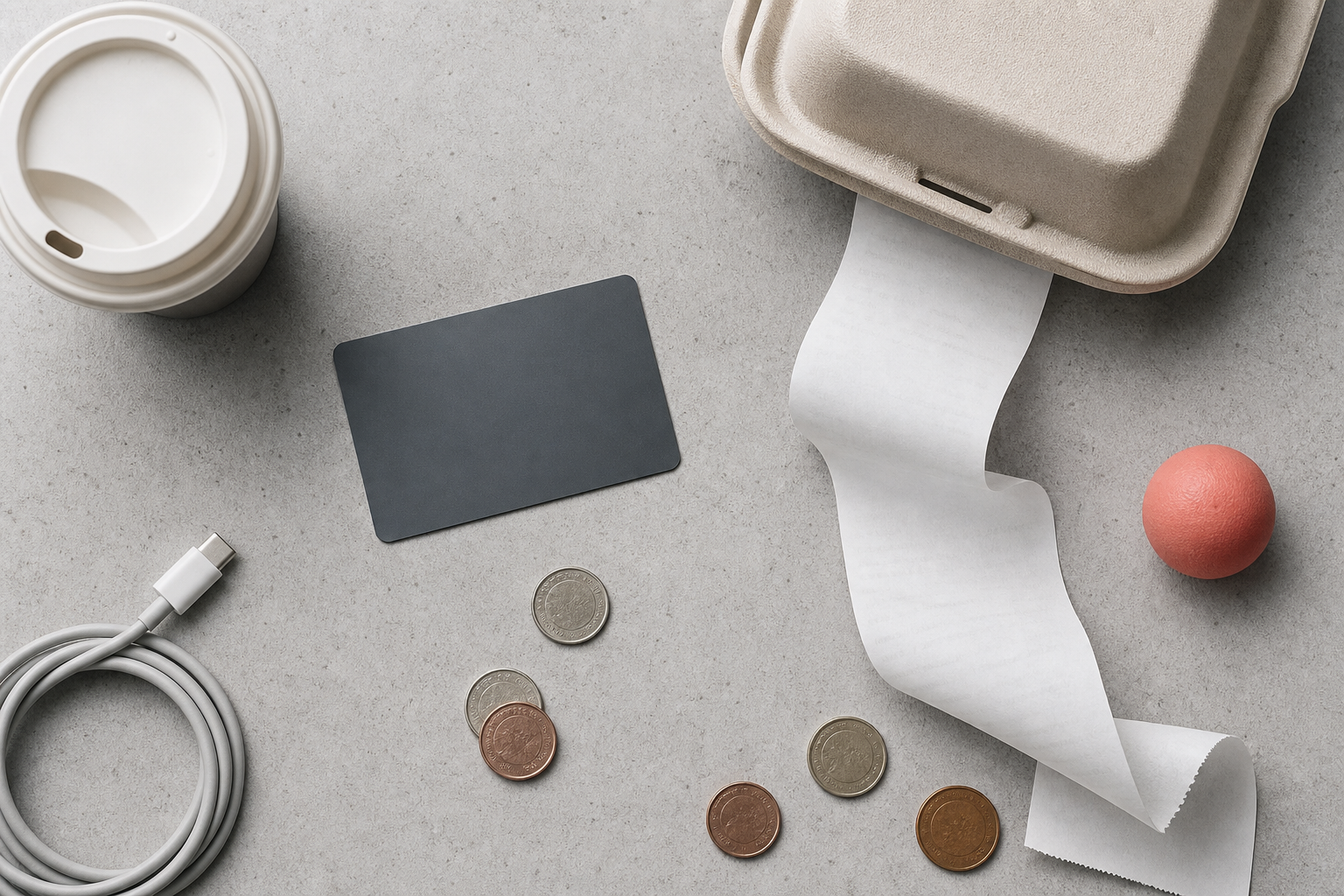
A lot of people assume they know what impulse buying looks like.
It is the sudden late-night order. The jacket you did not plan to buy. The gadget you got excited about for ten minutes. The checkout decision you made before you had time to think.
That part is real. But it is also only part of the picture.
If your money keeps disappearing and you cannot quite explain where it went, the issue may be bigger than impulse buying. It may be impulse spending.
That difference matters more than it sounds. Because once people hear "impulse buying," they often picture obvious, physical, one-off purchases. They think of shopping bags, random packages, and dramatic splurges. Then they look at their own habits and say, "That is not really me."
Meanwhile, they are saying yes to extra delivery fees, app upgrades, convenience purchases, quick little treats, and one-tap payments that feel too small to count.
The result is confusing. You do not feel like someone who impulse buys all the time. But your spending still feels faster than your intentions.
If that sounds familiar, it helps to separate the two.
Impulse buying and impulse spending are related, but not identical
Impulse buying usually means making an unplanned purchase in the moment. Something catches your attention, your resistance drops, and you buy it quickly.
Impulse spending is broader. It includes impulse buying, but it also covers the smaller money decisions that happen fast, emotionally, or without much reflection.
So yes, every impulse buy is impulse spending. But not all impulse spending looks like a classic impulse buy.
That is where people miss themselves.
You might not suddenly buy expensive random things. But you might still spend impulsively when you:
- order food because you feel drained
- add a paid extra because it feels easier
- upgrade to the nicer version without really deciding
- keep saying yes to "small" purchases that match your mood
- spend to avoid inconvenience, boredom, stress, or friction
Those choices can feel harmless because they do not look dramatic. They often feel practical, deserved, efficient, or too minor to examine.
But if they keep happening quickly and outside your real intention, they belong in the same conversation.
Why impulse buying gets noticed first
Impulse buying is easier to spot because it is visible.
There is an item. A checkout moment. A clear before and after. Sometimes even regret right away.
That makes it easier to name. You can point to the shoes, the lamp, the skin care order, the kitchen gadget, the book set, or the decorative thing you were not planning to buy.
Impulse spending is quieter. It leaks.
It can hide inside things that look normal:
- another delivery fee
- a premium add-on
- a same-day shipping choice
- a second coffee because the day feels rough
- a quick app purchase because it is only a few dollars
- a convenience decision that saves five minutes but happens every day
None of those choices looks huge on its own. That is why people rarely stop and say, "This is my real pattern."
Instead, they wait for a more obvious shopping moment to worry about.
But for many people, the bigger issue is not occasional dramatic buying. It is steady unexamined spending.
What broader impulse spending looks like in daily life
Impulse spending often shows up in categories that feel ordinary enough to excuse.
Convenience spending
You are tired, overloaded, late, or mentally done. So you pay for speed, ease, or fewer steps.
Sometimes that is a totally fair choice. But sometimes it becomes automatic.
That is the territory behind How to Stop Convenience Spending When You're Too Tired to Think. The spending is not always about wanting more stuff. Sometimes it is about wanting less effort.
Mood spending
You feel flat, annoyed, under-rewarded, restless, or stressed. So you spend a little to change the feeling.
Not necessarily on a big item. Just enough to get a shift. A snack, a delivery order, a beauty product, a digital extra, a little treat, a nicer version, a tiny reward.
These purchases often feel too small to count as a real problem. But repeated mood spending can shape your finances more than a few isolated impulse buys.
Friction-avoidance spending
You do not want to compare options, wait, think, or revisit the decision later. So you pick the faster paid option.
This can look like:
- keeping a subscription you barely use because canceling feels annoying
- paying extra to skip a few planning steps
- buying the bundle because deciding feels tiring
- choosing the upgrade because it removes uncertainty
The spending is real even if the purchase feels like admin.
Digital one-tap spending
A lot of impulse spending no longer feels like shopping. It feels like tapping.
That is part of the problem. When the path between urge and payment gets shorter, it gets easier to spend without ever fully feeling the decision.
That is why articles like Why Do I Buy Things on Impulse Even When I Know Better? matter. Knowing better is not always enough when the spending moment is too fast, too smooth, or too emotionally convenient.
Why the distinction matters if you want to spend less
If you only watch for classic impulse buying, you will miss a lot of your actual pattern.
You will think the problem happens once in a while. In reality, it may be happening in smaller pieces all week.
That matters for three reasons.
1. Small fast decisions add up differently than big obvious ones
A single impulse buy gets attention. Ten tiny fast spending decisions often do not.
But ten unnoticed decisions can shape your month more than one visible splurge. That is one reason broader impulse spending matters. It is not always loud enough to trigger concern, but it still has weight.
2. You may keep excusing the pattern because it does not look "bad enough"
This is a common trap. People tell themselves:
- at least it was useful
- at least it was cheap
- at least it saved time
- at least it was not something huge
- at least I did not buy random stuff
Sometimes those things are true. But they can also become a way to avoid looking at the speed and emotional logic behind the spending.
The question is not only whether each purchase can be defended. It is whether the pattern matches how you actually want to use your money.
3. The fix is different when the issue is broader than shopping
If the problem were only classic impulse buying, you might focus on shopping carts, wish lists, or waiting rules. Those can help.
But if the bigger issue is impulse spending, the work starts earlier. It includes energy, emotion, friction, autopilot, and how often you spend just to make the moment feel easier.
That broader lens usually leads to better change. It is less about policing yourself and more about noticing where fast spending is standing in for something else.
How to tell when a purchase belongs in the impulse-spending bucket
You do not need a perfect definition. You just need a few honest questions.
Ask yourself:
Was this planned, or did I slide into it?
Not every unplanned purchase is a problem. But if you barely registered the decision before paying, that matters.
What feeling was present right before I spent?
Were you bored? Tired? Rushed? Annoyed? Under-rewarded? Restless? A little numb?
Impulse spending often makes more sense once you name the state around it.
Would I still choose this if I had to wait a little?
This question gets to the heart of it. A short pause often changes nothing when the purchase is thoughtful. But it changes a lot when the purchase is mostly momentum.
That is why the waiting approach in The 24-Hour Rule for Impulse Buying still helps here, even when the spending does not look like a classic impulse buy.
Am I choosing the item, or the relief?
Sometimes the purchase is not really about the product. It is about reducing friction, changing your mood, or escaping the discomfort of deciding.
That does not mean you are failing. It just means the money decision may be solving an emotional problem first.
A calmer way to catch impulse spending earlier
The goal is not to become suspicious of every coffee, every convenience, or every unplanned purchase. That would get exhausting fast.
The goal is to become more honest about speed.
A simple pause can do a lot. Not a dramatic self-lecture. Just enough space to notice:
- what this is
- what feeling is driving it
- whether you would still want it in ten minutes, tomorrow, or next week
- what it costs in money and work hours
That last part matters because prices stay abstract when decisions are fast. Work hours make them feel more real.
And when a purchase is small, that can be especially useful. Small spending slips through precisely because it feels too minor to examine. A quick work-hours check gives it weight without turning it into shame.
If you want help with that kind of pause, paus is built for it. It helps you slow down before checkout, see the cost in work hours, and catch the fast little decisions that usually pass as "not a big deal."
Impulse buying is the visible part. Impulse spending is often the bigger pattern
If you keep thinking, "I do not really impulse buy that much, so why does my spending still feel off?" this may be the missing distinction.
Impulse buying is one clear expression of the problem. Impulse spending is often the wider system around it.
Once you see that, the pattern gets easier to work with. You stop waiting for a dramatic mistake to justify paying attention. You start noticing the smaller, faster, more ordinary moments where your money moves before your thinking catches up.
And that is good news, honestly. Because those are exactly the moments where a small pause can change the outcome.
If you want a calmer way to catch those moments, try paus. It helps you slow the decision down, make the cost feel real, and choose more intentionally without turning every purchase into a guilt spiral.
FAQ
Is impulse spending the same as impulse buying?
Not exactly. Impulse buying usually refers to an unplanned purchase made quickly in the moment. Impulse spending is broader and includes smaller fast money decisions like convenience purchases, digital add-ons, or mood-driven spending.
Why does impulse spending matter if the purchases are small?
Because small fast decisions can add up quietly. Many people miss the real pattern because each purchase feels minor on its own, even though the total changes how their money works over time.
Can a practical purchase still be impulse spending?
Yes. A purchase can be useful and still be impulsive if you made it quickly, emotionally, or without the reflection you actually wanted. "Useful" does not always mean "intentional."
How do I stop impulse spending without becoming too strict?
Focus on adding a short pause, not a punishment. Notice the feeling behind the purchase, check whether you would still want it after a little time, and make the price feel more concrete by translating it into work hours.