
How to Stop Adding Extra Items Just to Get Free Shipping
Free shipping can feel like saving money, but it often pushes you to spend more than you planned. Here is how to catch the pattern before your cart grows.

You go online to buy one thing.
Then you see it.
"You're only $8 away from free shipping."
Suddenly the whole decision changes.
Now it is no longer just about whether you want the original item. It becomes a small challenge. A chance to avoid a loss. A weird feeling that paying shipping would be wasteful when you are so close.
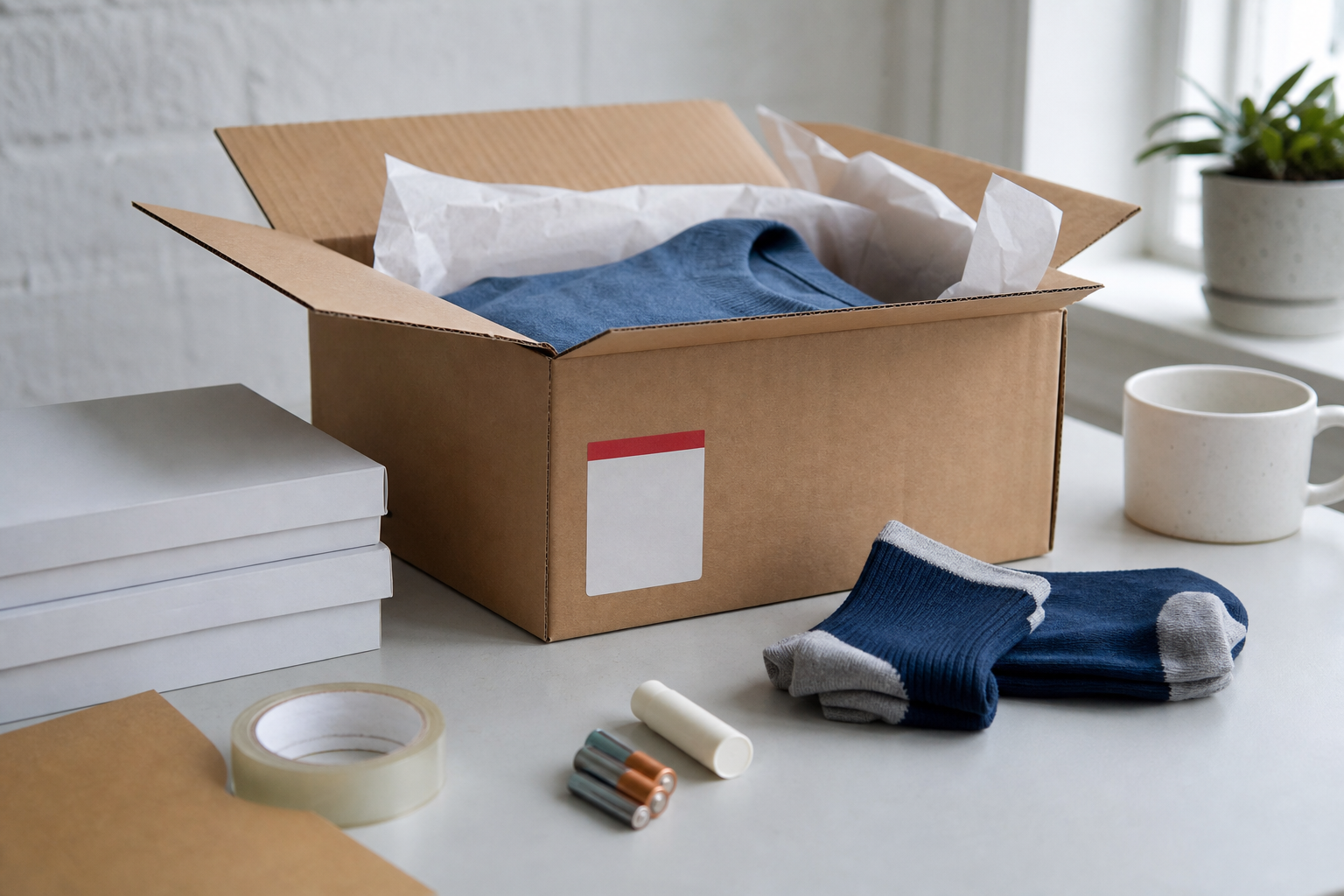
So you add lip balm, socks, batteries, snacks, or some other "might as well" item you were not planning to buy five minutes ago.
And later, the cart feels off.
Not huge. Just inflated.
If you keep adding extra items just to get free shipping, you are not bad at math. You are reacting to a very well-designed nudge.
Free-shipping thresholds work because they make spending more feel smart.
Why free shipping changes your brain at checkout
A shipping fee feels different from a product.
When you pay for shipping, it can feel like money disappearing into nothing. There is no object to show for it. No little reward arriving at your door besides the thing you were already buying.
That makes the fee feel irritating in a very specific way.
Then the store offers you an escape hatch.
Spend a little more, and the annoying fee disappears.
Psychologically, that flips the moment from "Do I want this extra item?" to "How do I avoid wasting money on shipping?"
That is powerful because people usually work harder to avoid a loss than to gain something small.
So the extra item starts to feel like the sensible move, even when it raises your total bill.
This is part of the same shopping logic behind discount codes that make you spend more than you save. The offer changes what your brain treats as the problem.
5 reasons people add things they did not plan to buy
1. The shipping fee feels more painful than the extra item
A $7 shipping fee can feel more annoying than a $9 add-on.
Not because it is actually worse.
Because the $9 item looks like something you get, while the $7 fee looks like money you lose.
That difference matters. It makes a higher total feel emotionally easier to accept.
2. "I'm so close" creates artificial urgency
The minute your cart is only a little short of the threshold, your brain starts treating the gap like a problem that should be solved.
If you are $8 away, you are not thinking clearly about whether you need another item. You are thinking about finishing the task.
That completion feeling is sneakily persuasive.
3. The extra item starts to feel free-ish
A lot of threshold spending runs on fuzzy mental math.
You tell yourself things like:
- "I was going to pay shipping anyway"
- "At least this way I get something"
- "It is basically free"
- "I may need this later"
But the extra item is not free. You are still paying for it.
You are just paying in a way that feels more satisfying than a fee.
4. Stores make the add-on choice too easy
When a site suggests low-cost extras right below the threshold message, it removes almost all friction.
You do not have to search. You do not have to think much. The store is already handing you "good enough" filler items. Amazon runs this play harder than most stores: the free-shipping bar, the suggested add-ons, and the one-tap reorder all push the same direction, which is why impulse buying on Amazon can feel so hard to stop.
That is one reason impulse buying triggers matter. Speed is often part of the trigger.
5. You want the checkout to feel complete
Sometimes people add an item just to make the transaction feel better.
Paying shipping can feel unfinished, inefficient, or mildly insulting. Hitting the threshold feels cleaner.
That small feeling of order can be enough to push the cart over the line.
6 signs you are padding your cart, not buying on purpose
If a few of these sound familiar, the free-shipping minimum is probably making the decision for you.
- You did not want the extra item until the threshold appeared. If it only became interesting after the site told you how far away you were, that is useful data.
- You are filtering for price, not usefulness. You are not asking what would actually help. You are looking for the fastest cheap thing that gets you over the line.
- "I might use it" is doing a lot of work. Maybe you will, maybe you will not. That kind of vague maybe is how filler items get into real orders.
- You feel annoyed by the fee and proud of beating it. That pride is a clue that the threshold turned the purchase into a small victory, even when the cart got worse.
- You are solving for checkout discomfort, not actual need. The extra item is there to make the screen feel better, not your life.
- If shipping were already free, the extra item would disappear. That is the simplest test of all. Take away the threshold and see what survives.
When paying for shipping is actually the cheaper choice
This is the part that often gets buried.
If the shipping fee is $6 and the extra item costs $11, you did not save $6.
You spent $5 more than the cheaper option.
Yes, you received another item. But if you did not really want it, the "savings" are mostly emotional.
A better question is this:
Would I still buy this extra item if shipping were already free?
If the answer is no, the item is probably just a shipping-avoidance purchase.
Another useful question:
Would I rather pay $6 once or bring home $11 of clutter, duplicates, or future regret?
That question tends to clear the fog fast.
If you want an even sharper reality check, turn the difference into time.
Seeing the cost in work hours can make a fake bargain look very different.
When adding more actually does make sense
Not every free-shipping threshold is a trap. Sometimes adding another item is the sensible call. It can make sense when the extra item was already on your near-term list, when you would buy it soon anyway, and when the item is more useful to you than the shipping fee is annoying.
It usually does not make sense when you are browsing a low-cost filler section just to cross the line, when the add-on feels vague or forgettable, or when the store has turned the checkout into a challenge you want to beat.
The point is not to follow a purity rule. The point is to notice whether the extra spend is serving you or just serving the checkout design.
A pause method for free-shipping threshold decisions
If you get pulled in by free-shipping minimums a lot, you do not need a perfect rule for every store.
You just need a short interruption.
Try this:
1. Separate the original purchase from the threshold purchase
Ask yourself which item you came for.
Then ask which item only appeared because of the shipping message.
Those are not the same decision.
2. Compare the real totals, not the story
Look at these two numbers:
- total with shipping
- total with the extra item and free shipping
Do not compare "shipping" versus "free shipping."
Compare the full amount leaving your account.
3. Ask whether the add-on solves a real need now
Not "could I use this someday?"
Now.
Would you actively choose it without the threshold in front of you?
If not, the item is probably there to make the offer feel better.
4. Leave the cart for ten minutes
Threshold spending feeds on momentum.
A short pause is often enough to make filler items look much less convincing.
5. If the choice still feels blurry, pay the fee
This sounds small, but it matters.
Sometimes the cheapest clean decision is to accept the irritation of shipping and keep your cart honest.
If you want help creating that pause before checkout, try paus. It helps you slow the moment down, see the real cost in work hours, and decide without the fake pressure of "free."
Small rules that keep your cart from growing
You do not need to ban free shipping offers forever.
A few simple rules can do a lot.
Keep a personal filler-item blacklist
Notice the kinds of things you add just to cross thresholds.
Mini toiletries. Sale accessories. Backup household items. Cheap beauty extras. Random pantry stuff.
If certain categories are repeat offenders, make them your no-threshold items.
Decide your shipping rule before you shop
For example:
- I only add an item if I already planned to buy it this week.
- I will pay shipping if the add-on costs more than the fee.
- I do not cross free-shipping thresholds with "maybe" items.
Pre-deciding helps because it stops the store from making the rule for you.
Use a saved list instead of the live cart
If something seems useful enough to want later, move it to a wish list or notes list first.
That keeps the threshold from forcing an immediate yes.
Watch for the phrase "I may as well"
That phrase is a strong signal.
A lot of unnecessary spending starts right there.
It usually means the offer is leading and your real desire is following behind.
The goal is not to win against shipping
It is easy to turn this into a tiny game.
Beat the fee. Get the deal. Cross the line.
But the store benefits when you start treating checkout like a challenge.
Your job is not to defeat shipping.
Your job is to protect the original decision you were trying to make.
If you planned to buy one thing, and the free-shipping prompt turned it into three things, that is useful information.
It means the pressure changed the purchase.
That is exactly the kind of moment worth slowing down.
If you want a calmer way to do that, paus gives you a practical pause before checkout so free-shipping thresholds do not quietly spend the extra money for you.
FAQ
Why do I keep buying extra items for free shipping?
Because free-shipping thresholds make the shipping fee feel like a loss to avoid. That changes the decision and makes extra spending feel rational, even when your total goes up.
Is it better to pay for shipping or add another item?
If the extra item costs more than the shipping fee and you do not really need it, paying shipping is often the cheaper choice.
Why does free shipping feel so hard to ignore?
It creates urgency, completion pressure, and the feeling that you are wasting money if you do not hit the threshold. Stores use that feeling on purpose.
How can I stop overspending at checkout?
Compare the full totals, not just the shipping line. Pause before adding filler items, ask whether you would buy them without the threshold, and use a tool like paus if you want help slowing the decision down.
Why does paying for shipping feel worse than buying another product?
Because shipping feels like friction instead of ownership. You spend money and get nothing tangible back, which makes even a small fee feel more annoying than a slightly larger add-on purchase.